Unexplained spots on fresh sheets can feel unsettling, especially around children’s beds, after travel or between homestay bookings. We start with signs of bed bugs, not repeated spraying where the family sleeps: early detection helps us choose sensible protection and understand when repellents are not enough.
What are the earliest signs of bed bugs?
Early signs of bed bugs include dark faecal spots, pale shed skins, tiny eggs, blood marks and live insects near sleeping areas. Bites can raise suspicion, but cannot confirm bed bugs on their own.
Several matching signs of bedbugs are more informative than one unexplained mark.
Dark spots and blood marks are clues, not proof
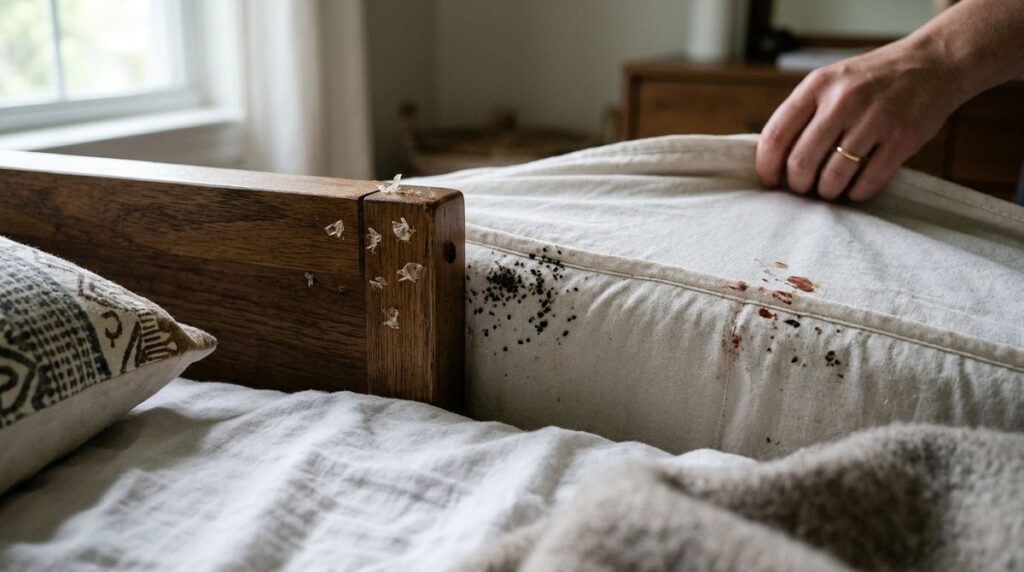
Black or brown specks along mattress seams, bed frames and upholstery may be faecal deposits. Rusty-red bedding marks may be bloodstains.
Some faecal spots smear reddish-brown when dampened, but that is not a reliable confirmation test. Stains can have unrelated causes.
Shed skins, eggs and live insects provide stronger evidence
Adults are reddish-brown, oval, wingless and approximately apple-seed-sized. Nymphs are smaller and paler; shed skins are hollow, translucent insect-shaped remains.
Tiny pale eggs attach to sheltered surfaces, while empty eggshells remain after hatching. A labelled identification photograph helps distinguish adults, nymphs, eggs and cast skins.
Bedbug bites cannot identify the insect
Bedbug bites may appear in clusters or lines, resemble mosquito or flea bites, or leave no visible reaction. We explain why bite marks overlap separately.
Repeated overnight marks warrant inspection, not a diagnosis. A sweet, musty odour can accompany larger infestations, but smell is not dependable evidence.
Where should a bedroom inspection start?
Check the mattress first, then work outwards
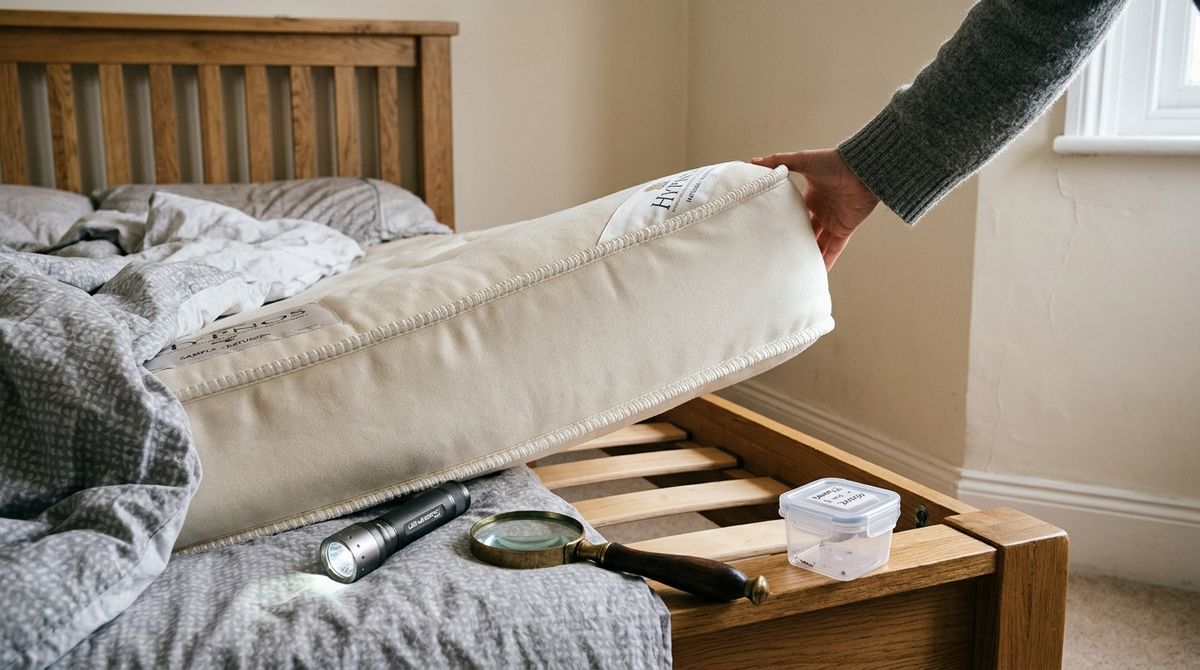
We need a torch, magnifying glass, phone camera and clear, sealable container. Bed bugs hide in narrow spaces and commonly emerge while people rest, so small populations can be missed.
Start at mattress piping and labels, then inspect divan or box-spring fabric. Move to bed-frame joints, screw holes and the headboard before checking bedside furniture, skirting boards, curtain folds and visible wall cracks.
Around electrical fittings, inspect accessible surfaces only. Never dismantle sockets.
Include sofas, floor mattresses and shared sleeping areas
Sofa seams and joints, floor-mattress undersides and adjacent cracks deserve the same attention in homes, homestays and shared accommodation. For incoming furnishings, our guide to checking used pieces before bringing them indoors covers another common entry route.
Keep suspected bedding, clothing and furnishings in the room. Seal items before necessary transport to avoid spreading insects elsewhere.
For hosts and tenants, record the room, date and evidence, then alert the accommodation manager or landlord promptly. Luggage and belongings can carry bed bugs between locations; cleanliness is not the explanation.
What does one suspicious finding actually mean?
Match the next step to the evidence
We match the response to the strength of the finding, rather than treating every clue as confirmation.
| Finding | Next step |
|---|---|
| Bites or one stain | Inspect and monitor |
| Suspected skin or egg | Photograph and request identification |
| Live insect | Contain and arrange expert identification promptly |
Using a soft brush or folded paper, gently guide the specimen into a clear, sealed container without crushing it. Label the date, room and exact location.
An identified live bed bug confirms presence, not the size or extent of an infestation. One insect is enough to investigate, but not enough to map every hiding place.
Separate fresh activity from old evidence
Old marks and cast skins cannot establish current activity, and appearance alone cannot reliably date either.
Photographs provide a baseline. Newly appearing evidence, live insects or monitor captures strengthen the case for ongoing activity. Residual marks after treatment do not, by themselves, prove that treatment failed.
How can ongoing protection avoid repeated bedroom spraying?
Repellents neither confirm nor resolve an established infestation. To get rid of bedbugs, we need integrated measures, not repeated applications of one product, particularly because insecticide resistance can complicate control.
Suitable mattress encasements, careful vacuuming, interceptors beneath suitable bed legs and bedding clear of the floor support protection. Fabric-appropriate laundering plus heat drying matters; ordinary washing alone may be insufficient. Heavy infestations need a licensed professional.
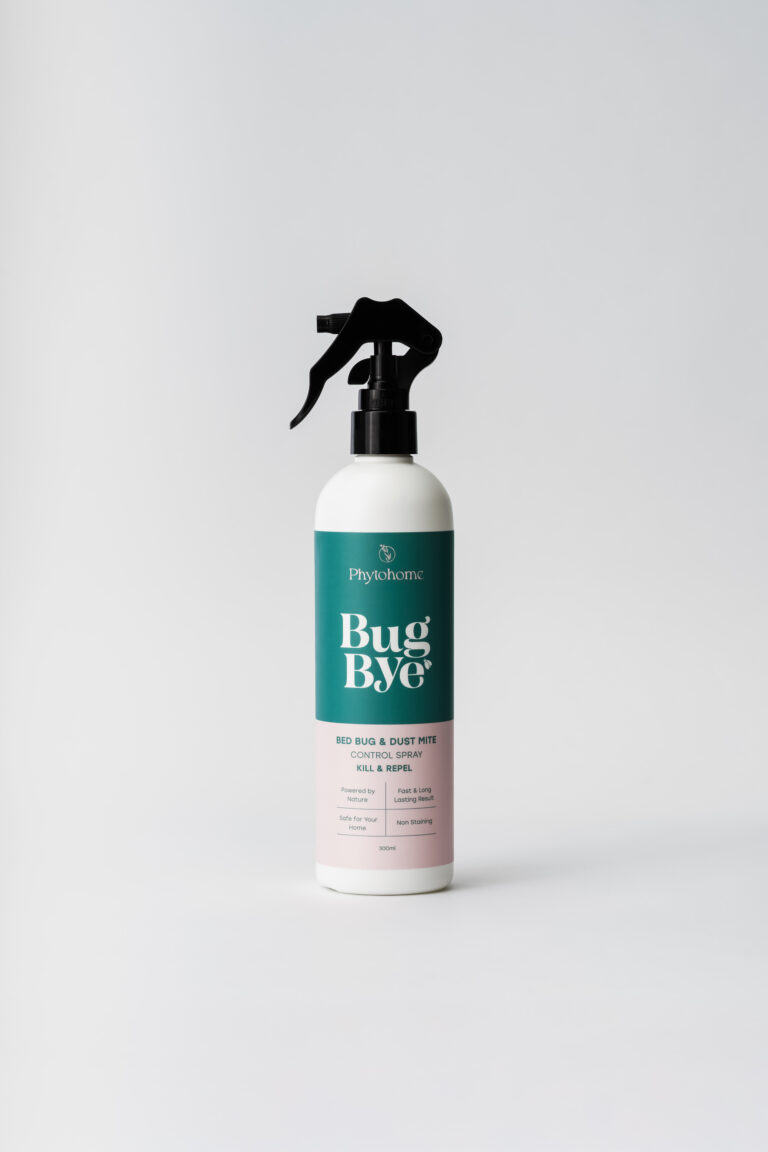
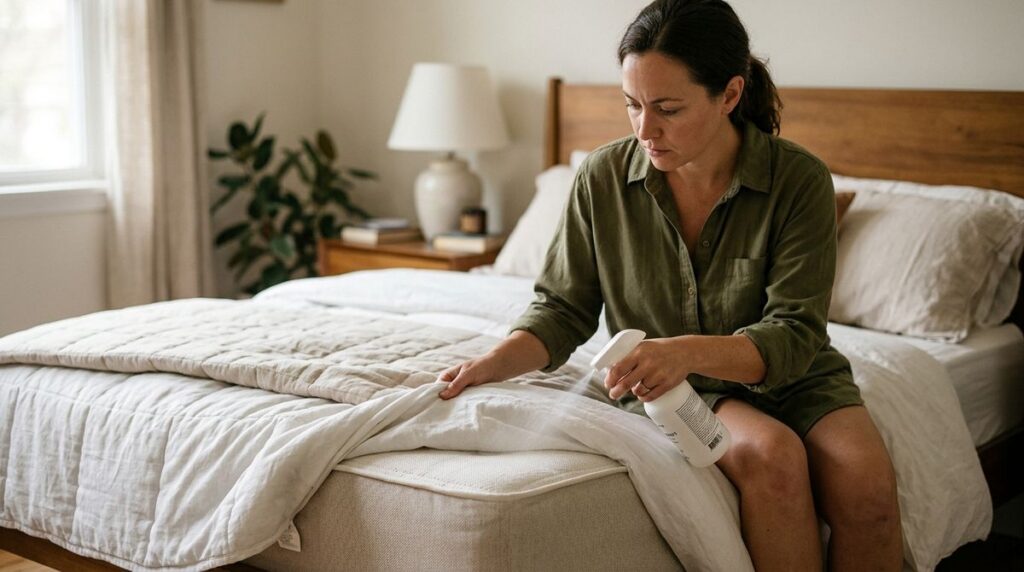
For any suitable repellent mist, use only label-approved surfaces, mist lightly, ventilate and let treated items air out for a few hours before sleeping on a bed or packing a suitcase. Follow any longer label requirements. Our guide to applying repellents around sleeping and travel items adds practical context.
Avoid foggers, excessive spraying and applications to skin or bedding unless specifically permitted by the label.
Frequently asked questions
Could the insect be a flea, carpet beetle or bat bug?
Fleas jump; carpet beetle larvae are hairy, unlike flattened bed bugs. Bat bugs look extremely similar, with fine hair differences generally requiring magnification and expert identification. Dust mites are microscopic, not visible like adult bed bugs, and do not bite.
Are bed bugs a sign of a dirty home?
No. Bed bugs can arrive with luggage or used belongings, including in carefully cleaned homes. Clutter makes inspection and access harder, but an infestation is not a judgement on housekeeping or personal responsibility.
Can bed bugs still be present after an inspection finds nothing?
Yes. One negative inspection cannot rule out a small, hidden population. We can record findings, repeat checks over subsequent days and weeks, and use suitable interceptors beneath bed legs. Persistent evidence warrants professional assessment rather than repeated speculative spraying.
What is one small check after a hotel or balik kampung stay?
Before unpacking near beds, inspect suitcase seams and zip folds with a torch. Our guide to keeping travel hitchhikers out of the bedroom explains the wider precautions. We can start with that one careful check, rather than spraying everything.