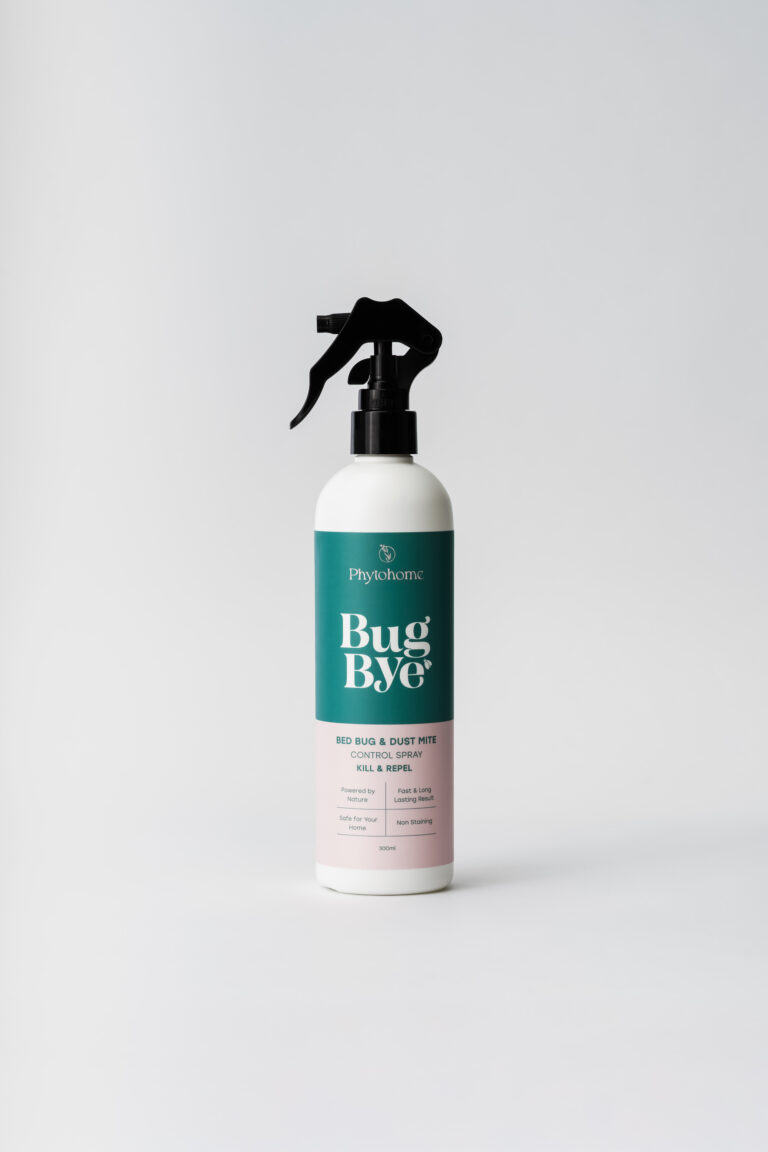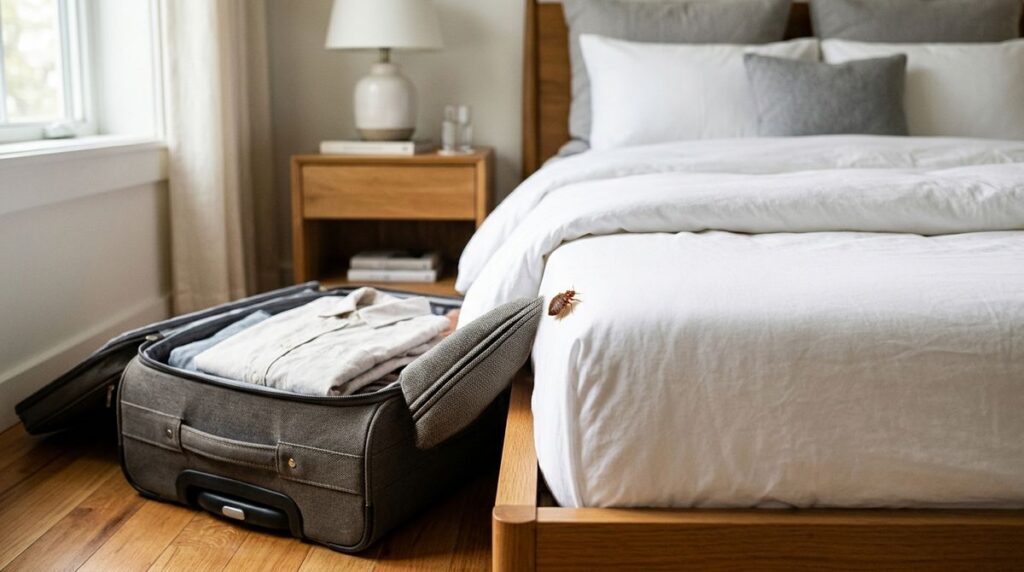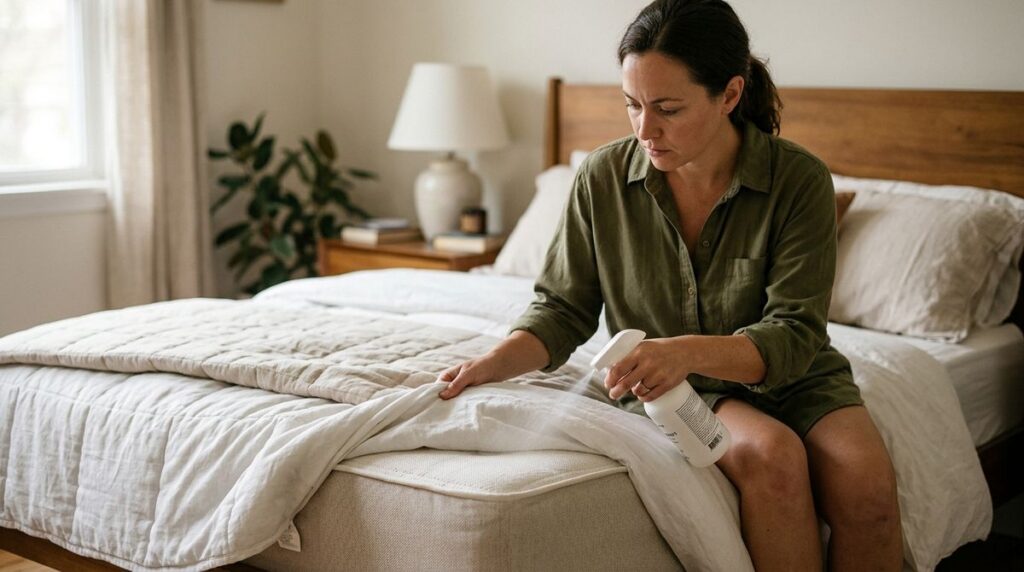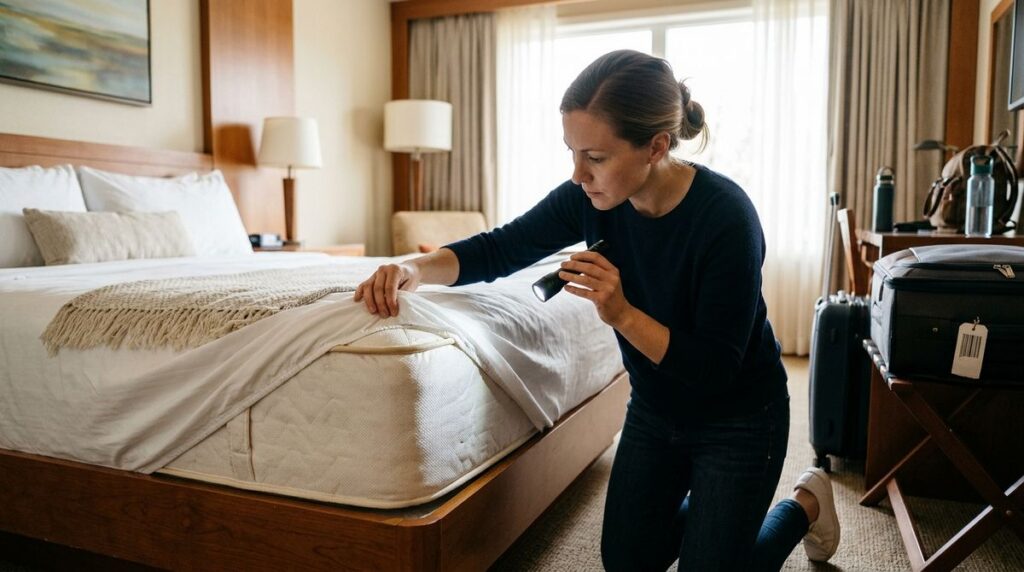
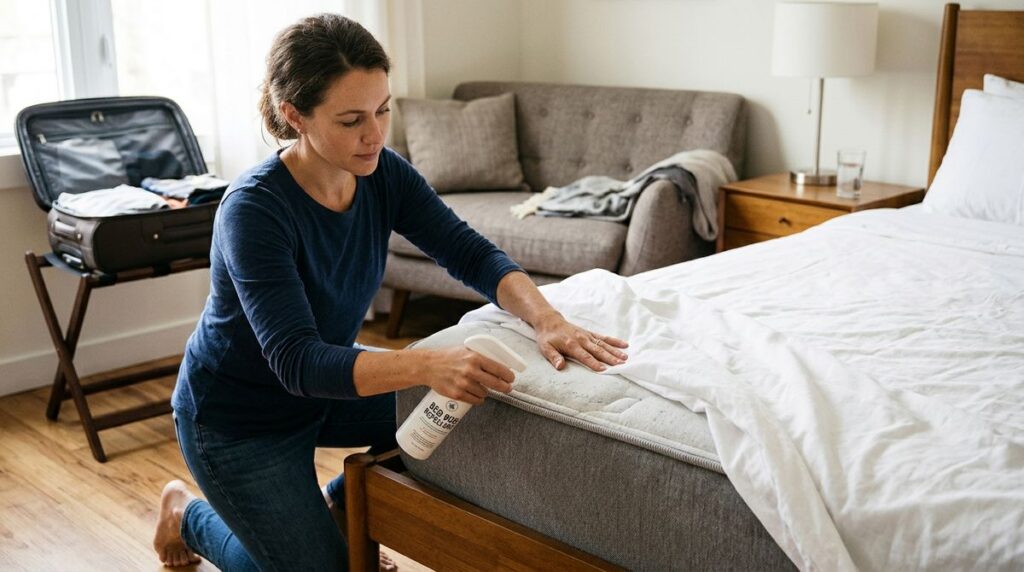
Finding dark marks on bedding, or unpacking after a hotel stay, can make settling down feel uneasy. Our approach to how to use bed bug repellent starts with repelling only where the label permits, then supporting ongoing protection with inspection, containment and physical barriers, rather than spraying everything around the bed.
Gather the essentials before starting
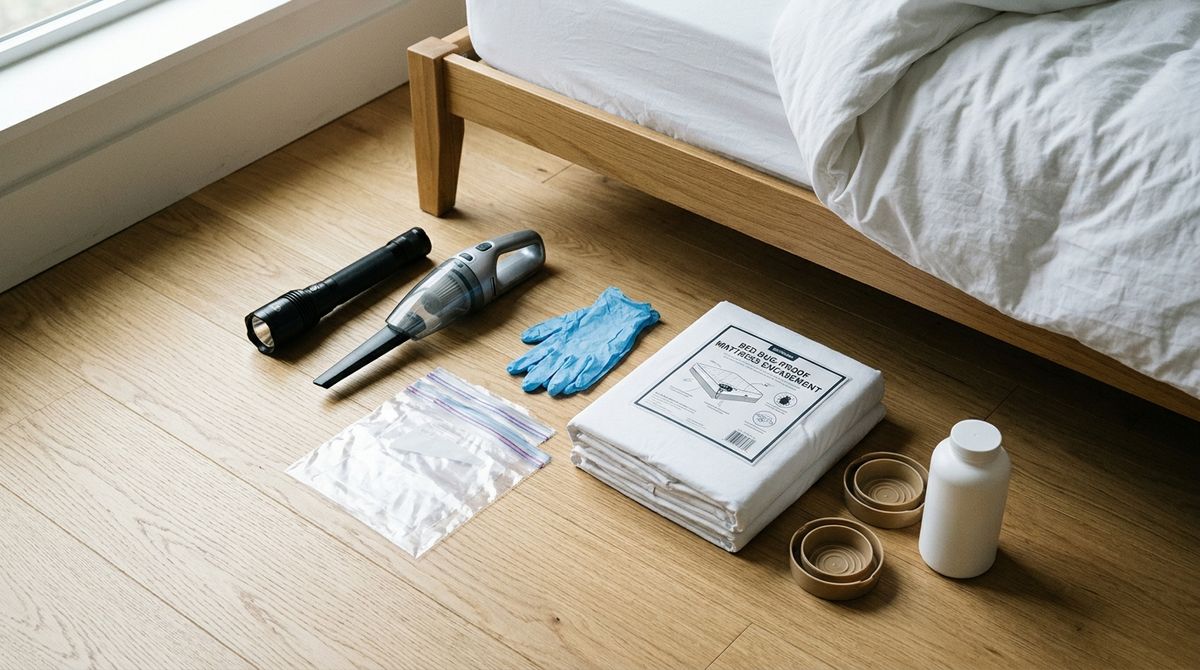
We need a product labelled for bed bugs and the intended surface, a torch, sealed bags, a crevice-tool vacuum and label-required protective equipment. Suitable laundry facilities, bed bug-proof encasements and bed-leg interceptors support the routine.
We allow time for inspection, preparation and several hours of airing, not a quick spray before bedtime. Where misting is permitted, our rule is to mist lightly, ventilate and let treated items air out for a few hours before sleeping on the bed or packing the suitcase. Longer label requirements take priority.
Step 1: check for bed bugs and choose the right product
Inspect before choosing a prevention routine
We inspect mattress seams, bed-frame joints, sofa crevices and luggage seams. Adults measure roughly 6 mm; live insects, shed skins and dark spotting are useful clues. Our guide to recognising physical clues helps distinguish evidence from suspicion.
Bites alone cannot confirm bed bugs. An unused room is not necessarily clear either, because bed bugs can survive months without feeding.
Check: We photograph evidence before cleaning. Confirmed activity calls for inspection, not more repellent, and heavy infestations need a licensed professional.
Match the product’s claim to the job
We distinguish a repellent’s avoidance claim from an insecticide’s killing claim; some labels include both. Laboratory avoidance does not establish dependable protection beside a sleeper, because host-seeking bugs may cross treated barriers (Entomology Today).
Repellent does not remove an established infestation. It supplements bed bug control.
Step 2: read the label and prepare a permitted application area
Confirm the pest, surface and application directions
We read the target pest, permitted surfaces, application method, precautions, protective equipment, drying or re-entry conditions and reapplication instructions. A mosquito claim does not establish suitability for bed bugs or household fabrics.
We keep products off skin, bedding, clothing and mattresses unless the label explicitly permits that exact use. Only after confirming permission do we test material compatibility in a concealed spot. DEET has a noticeable smell and can damage certain plastics.
Check: Pest, surface and intended use must all match. Missing or unclear directions mean no application until clarified, or selection of another appropriately labelled product.
Respond promptly if repellent has already been misapplied
We stop use, keep the item out of service and follow label clean-up and first-aid directions. Airing alone does not make an incorrectly treated sleeping surface suitable.
For skin or eye exposure, we follow the relevant instructions promptly and seek poison advice or medical help as directed. Serious symptoms require urgent help.
Step 3: protect the mattress without soaking the sleeping surface
Prepare the bed and treat only approved locations
We bag suspect bedding before moving it for fabric-appropriate laundering and drying. Next, we inspect and vacuum accessible seams and frame joints, then seal vacuum contents for disposal.
Application stays within label-approved locations. Permission for a bed frame never implies permission for mattresses, pillows or sheets.
Where permitted, we mist lightly, ventilate and allow a few hours of airing before sleeping on the bed, observing longer label requirements.
Check: We confirm permitted use and return-to-use conditions. Persistent dampness or uncertainty is not solved by covering the surface with clean sheets.
Add a physical protection layer
We fit a suitable bed bug-proof mattress encasement and position interceptors under bed legs according to instructions. Bedding stays off the floor, with no bridges to surrounding furniture.
Encasements support inspection and containment, not instant whole-room elimination.
Step 4: treat permitted sofa areas and inspect hidden seams
Inspect upholstery before applying anything
We inspect beneath removable cushions and around accessible joints without damaging upholstery. After vacuuming crevices, we contain suspect removable covers before care-label laundering.
Only explicitly permitted upholstery or structural areas receive treatment. We mist lightly rather than soaking cushions, ventilate and allow several hours of airing before reuse, or longer where required.
Check: Fabric, finish and foam restrictions must be respected. Staining, damage or label uncertainty means stopping and obtaining product-specific guidance, not adding another treatment.
Escalate activity inside the sofa
A clean-looking surface cannot rule out activity inside a frame. Persistent evidence needs professional assessment, with heat or steam selected around material limitations.
We avoid moving suspect sofas into another room or passing them to another household. The same caution applies when assessing pre-owned furniture.
Step 5: protect luggage before travel and contain suspected exposure
Inspect the room and prepare luggage before packing
Any permitted luggage treatment happens before packing, never over clothes or toiletries. We check shell, lining and trim compatibility, especially with DEET-containing products.
We mist lightly, ventilate and let the suitcase air out for a few hours before packing, following longer label instructions.
On arrival, we inspect mattress seams, the headboard and luggage rack before unpacking. Our arrival inspection routine adds detail. Luggage stays closed, away from beds and upholstered furniture, with belongings in sealed bags.
Check: Hotel stays, holidays and balik kampung trips are inspection occasions, not automatic evidence of exposure.
Contain belongings after suspected hotel exposure
We document evidence and request alternative accommodation arrangements without carrying unpacked belongings between rooms.
At home, suspect contents stay sealed and separate while we unpack away from sleeping areas. We inspect suitcase seams and pockets, then launder suitable fabrics and use an appropriate dryer heat cycle. Washing alone is not a reliable substitute for a validated heat process.
Fix: We avoid packing freshly treated items, spraying clothing without permission or assuming sealed bags have killed bed bugs. Containment limits movement; it is not treatment.
Step 6: monitor the results and adjust ongoing protection
Track physical evidence, not scent or reassurance
We keep a weekly record of seams, encasements and interceptors, including dates, locations and photographs. Homestays and rental properties need checks between guest stays too.
Check: Repeated inspections matter. A quiet night, lingering scent or absence of visible bites does not prove protection.
Fix: Reapplication follows the labelled interval and any specified trigger, not returning anxiety.
Different results for icaridin, also called picaridin, reinforce the need for formulation-specific evidence. An ingredient name alone cannot predict performance.
Arrange professional help when signs persist
New or persistent evidence calls for inspection; heavy infestations need a licensed professional.
We combine encasements, monitoring and laundering with professionally selected heat, steam or controlled freezing where appropriate. Such integrated methods are better supported than repellent alone (Rutgers Extension).
We avoid improvised room heating, fogging and unvalidated home-freezer routines.
Frequently asked questions
Can mosquito repellent also repel bed bugs?
We only consider a product when its label supports the relevant bed bug use and surface. Laboratory findings for DEET or icaridin do not authorise application to mattresses, clothing or luggage.
A product suitable for exposed skin against mosquitoes is not automatically suitable for treating a sleeping area. We follow the actual directions, not assumptions based on the active ingredient.
Do essential oils provide reliable overnight protection?
We do not rely on them for overnight protection. Avoiding a treated hiding place differs from being prevented from reaching a sleeper. Some tested oil constituents showed avoidance, but treated barriers did not reliably prevent feeding (González-Morales and colleagues).
Our discussion of plant-derived spray limitations explains that distinction. We avoid DIY oil recipes and never assume plant-derived ingredients belong on sleeping surfaces.
How often can we reapply bed bug repellent?
We follow the specific label. There is no universal protection period, and laboratory durations are not household promises. Adding more between permitted applications increases exposure without establishing better protection.
For permitted mist applications, we mist lightly, ventilate and allow a few hours of airing before sleeping on a treated bed or packing treated luggage. Longer label requirements still apply.
Does bed bug repellent also deal with dust mites?
Bed bugs and dust mites are different pests. We cannot extend a bed bug claim to dust mites unless the product states that purpose and permits the intended application.
We keep ordinary fabric-care routines separate and follow bedding and upholstery care instructions. One product name does not establish suitability for every household pest concern.
What is the simplest first action tonight?
We can start with a torch inspection of one mattress seam, looking closely for live insects, shed skins and dark marks.
That small action gives us a clearer starting point without adding spray to a sleeping surface. A clear seam cannot guarantee a clear bed, but there is no need to treat everything in a moment of worry.
References
Inspection and control, integrated methods, travel prevention, Krüger et al. (2021), Wang et al. (2013), and González-Morales et al. (2021) support the guidance above.