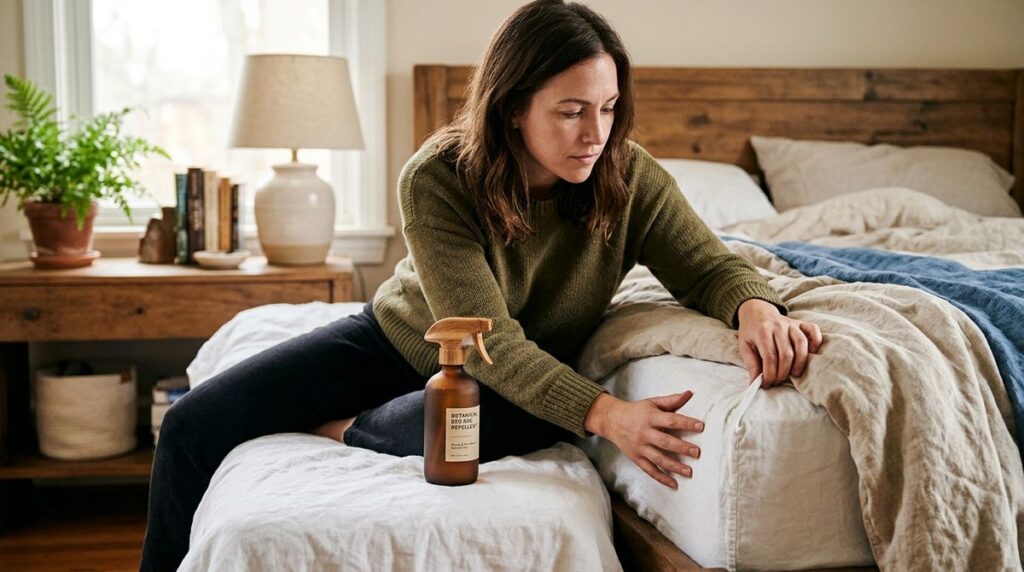
Finding another suspicious mark on freshly changed bedding is exhausting, especially when our next thought is what might be hiding where our family sleeps. We understand the appeal of a natural bed bug spray: something gentler-feeling, without turning bedtime into another worry. Our honest position is that plant-based ingredients may have a useful role, but the label alone cannot promise lasting protection, and a pleasant scent cannot tell us whether the problem is under control.
Can a natural bed bug spray repel bugs and provide ongoing protection?
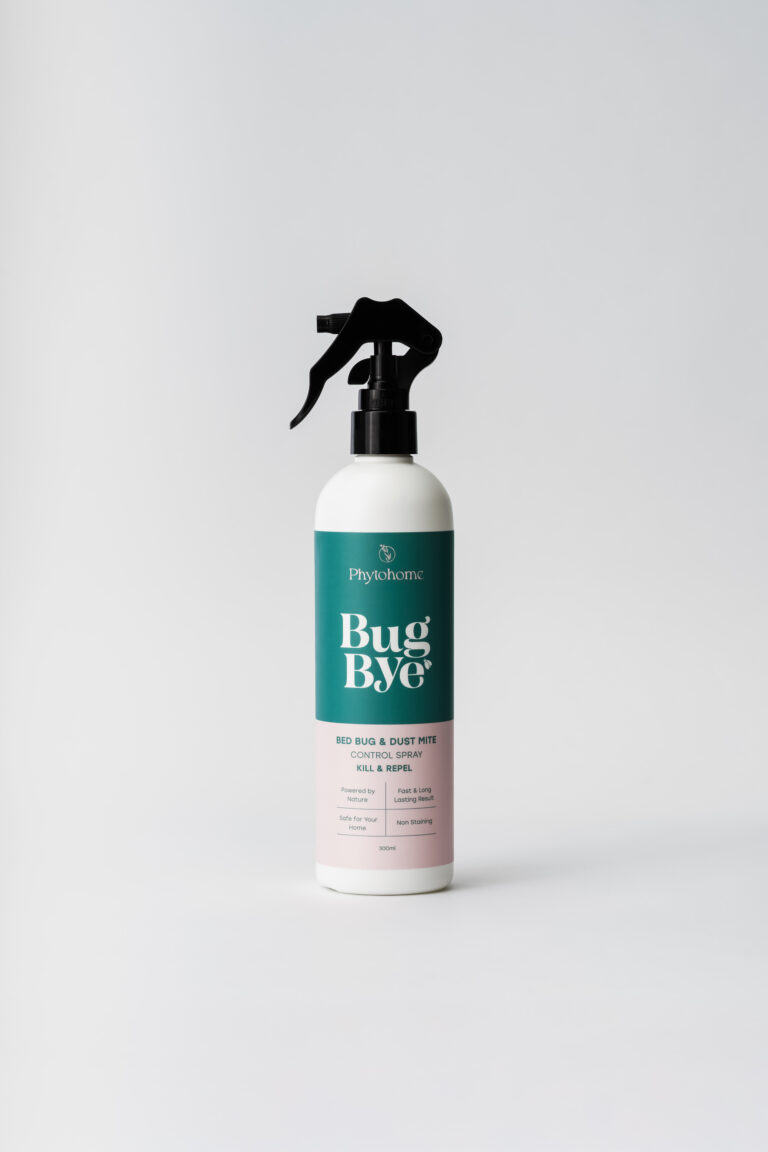
Some natural bed bug sprays may repel bed bugs or affect exposed insects, depending on the formulation and supporting evidence. Reliable ongoing protection and elimination of an established infestation cannot be assumed. We would treat an appropriately labelled spray as part of a wider control plan, not a replacement for one.
“Plant-based” describes ingredient origin. It does not establish how long protection lasts, whether eggs survive, or whether a product belongs on a sleeping surface.
Repelling, killing on contact and clearing an infestation are different claims
Repellency means discouraging bugs from entering or remaining in an area. Direct-contact action affects insects actually reached during spraying. Residual activity means an effect remains after drying, while egg control concerns eggs rather than mobile bugs. Infestation control means addressing the whole population, including hidden insects.
Our decision rule is to match the intended job to the exact label claim. A repellent claim does not establish treatment performance. Ongoing protection needs product-specific evidence and reapplication instructions, a distinction worth understanding when comparing protection claims for different pests.
What does the evidence actually show about plant-based sprays?
Botanical activity is not the same as proven bedroom protection. We need evidence for the finished product and its intended use, rather than assuming every spray containing a familiar oil performs alike.
Exposed bugs are only part of the problem
Some botanical compounds, including constituents associated with clove, thyme, geraniol and peppermint, have shown activity in laboratory or direct-contact testing. Results depend on concentration, formulation, life stage and exposure time. Findings cannot automatically transfer to another retail mixture.
Eggs and insects tucked into mattress seams, headboards, skirting boards, furniture joints or electrical voids complicate treatment. Application method, drying time and post-drying activity matter too. Plant origin does not establish performance against insecticide-resistant populations.
Three outcomes that can look misleading at first
Consider three hypothetical situations, not verified treatment stories. In the first, exposed bugs are affected, but eggs and hidden insects remain. In the second, bugs avoid a treated patch and move elsewhere rather than disappear.
In the third, inspection, appropriate heat, encasements, monitoring and targeted treatment address more of the problem. That is a stronger approach, though follow-up still determines success.
Before accepting an efficacy claim, we need original evidence covering the formulation, exposure conditions, eggs, dried residues, field follow-up and any resistant populations tested.
What must a malaysian buyer check on the label?
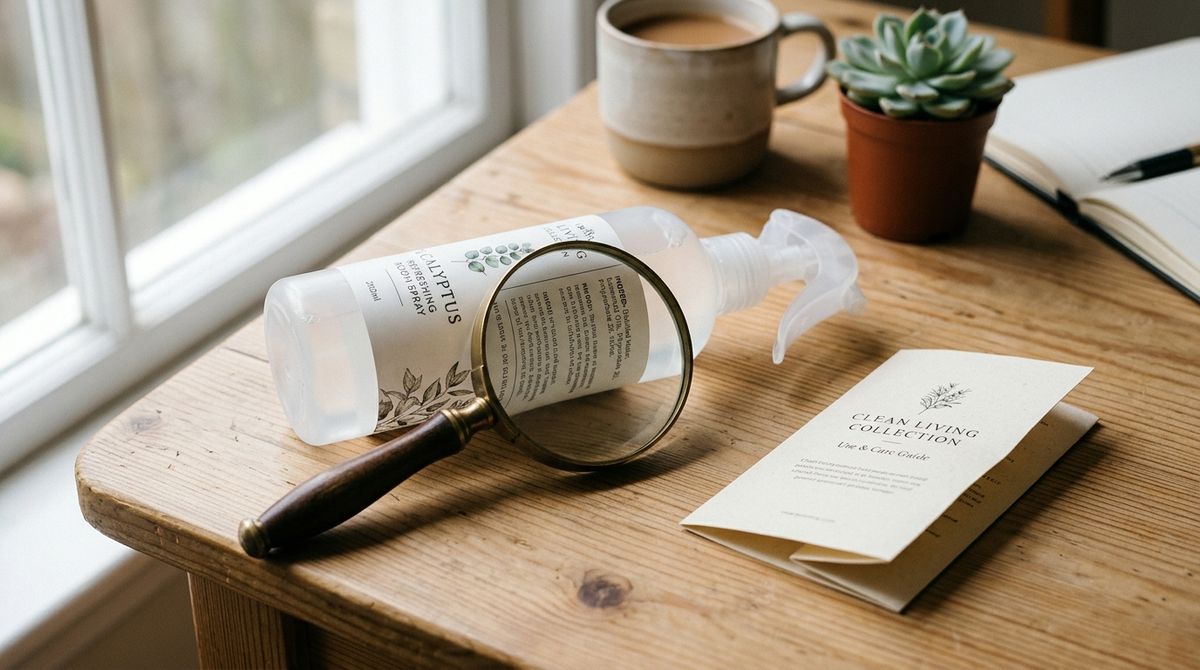
We would start with the back label rather than the marketplace headline. Clear directions matter more than reassuring botanical imagery.
Check the claimed pest, application sites and directions
A useful label check covers six things:
- Bed bugs explicitly named; repellent or treatment claim.
- Active ingredients and formulation.
- Permitted indoor surfaces and exclusions.
- Application amount, contact time and repeat interval.
- Drying, ventilation and re-entry conditions.
- Storage and disposal instructions.
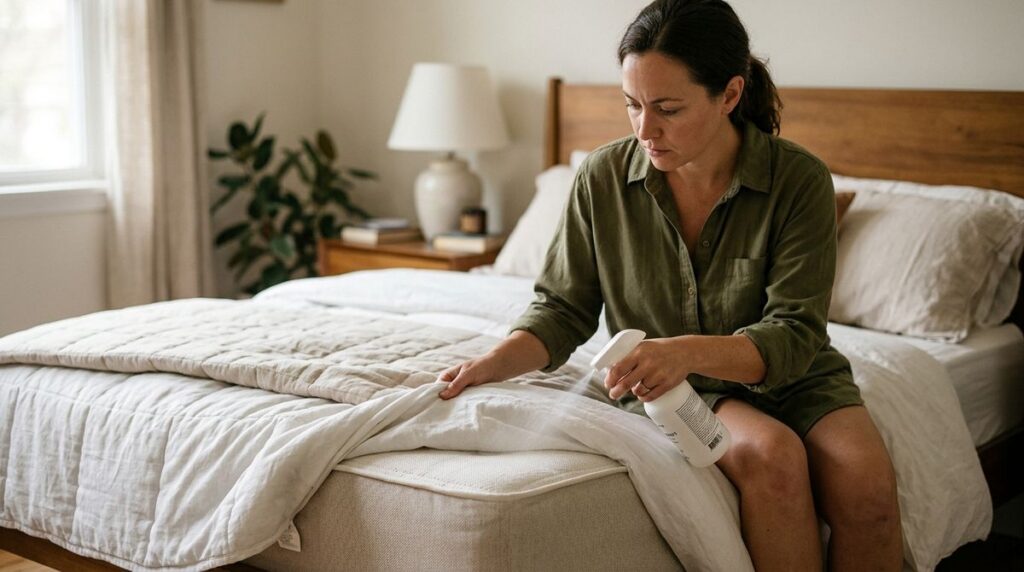
Permission to treat bed-frame cracks does not automatically permit spraying pillows, sheets or an entire mattress. Missing directions are a reason to pause, not improvise. Electrical sockets and fittings are not household spray targets.
Verify malaysian authorisation separately from marketing
Where registration is required, we need the exact product name, registration details, registrant and approved label to match. We should seek confirmation from Malaysia’s Pesticides Board or Department of Agriculture when status is unclear, rather than rely on an unverified registration-checking website or seller screenshot.
Marketplace availability, botanical branding, overseas registration or an overseas exemption does not establish Malaysian authorisation. Nor does registration automatically validate every claim added to an advertisement. Unclear status deserves confirmation with the relevant authority before purchase.
How can we use a labelled spray more cautiously around beds and luggage?
Our starting point is the permitted use, not the assumption that plant-derived ingredients make exposure unimportant. A mattress, wooden frame and suitcase lining may each have different restrictions.
Light misting and proper airing come before reuse
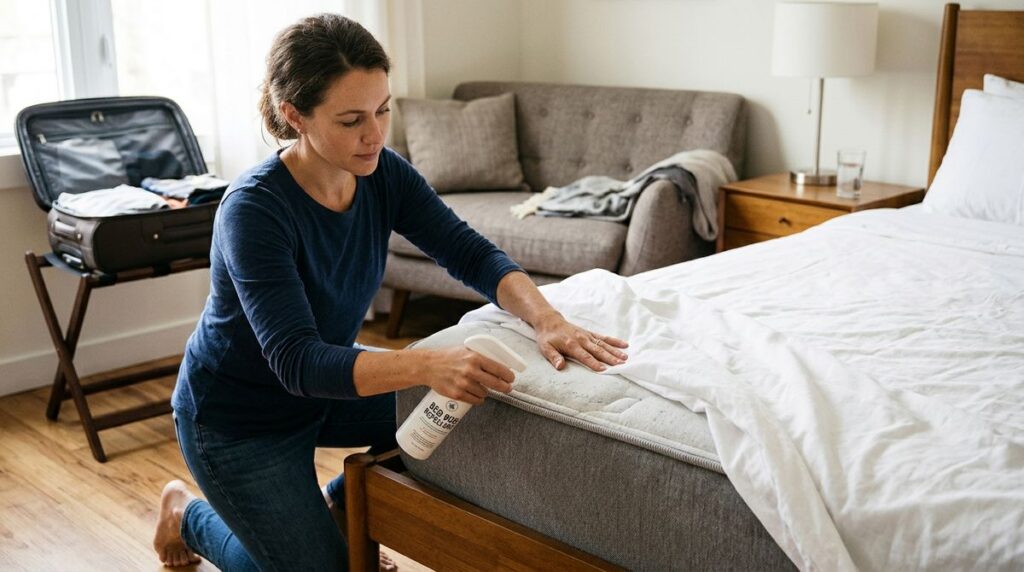
Where the label permits treatment, we should mist lightly at the directed rate, ventilate, and let treated items air out for a few hours before sleeping on the bed or packing the suitcase. Longer label-specified waiting periods take priority. Dryness or a faded scent alone does not establish readiness.
Children and pets must stay away during application and until labelled re-entry conditions are met. We should avoid skin, eye and inhalation exposure, protect food and aquariums, and follow ingredient-specific pet precautions. For anyone sensitive to sprays or fragrances, avoiding exposure deserves particular attention.
A patch test on an inconspicuous permitted surface can reveal staining or finish damage. Our guide to applying repellent on different household surfaces explains why application sites cannot be treated interchangeably.
Homemade essential-oil mixtures are not automatically a better option
Homemade mixtures leave concentration, even mixing, surface compatibility and waiting periods uncertain. We should not apply undiluted essential oils to skin, pets or bedding.
Rubbing alcohol, kerosene, bleach and outdoor pesticides are not improvised indoor bed bug treatments. A strong botanical scent proves neither effectiveness nor adequate ventilation.
When is a spray useful, and when is professional treatment the better move?
A spray earns its place through a specific job within a wider plan. Repeated spraying without identification can add exposure while leaving the actual hiding places untouched.
Start with evidence, containment and monitoring
Bites alone cannot confirm bed bugs. We need physical evidence, a retained specimen or professional identification. Bed bugs are blood-feeding insects; dust mites are microscopic organisms associated with household dust. The names and product claims are not interchangeable.
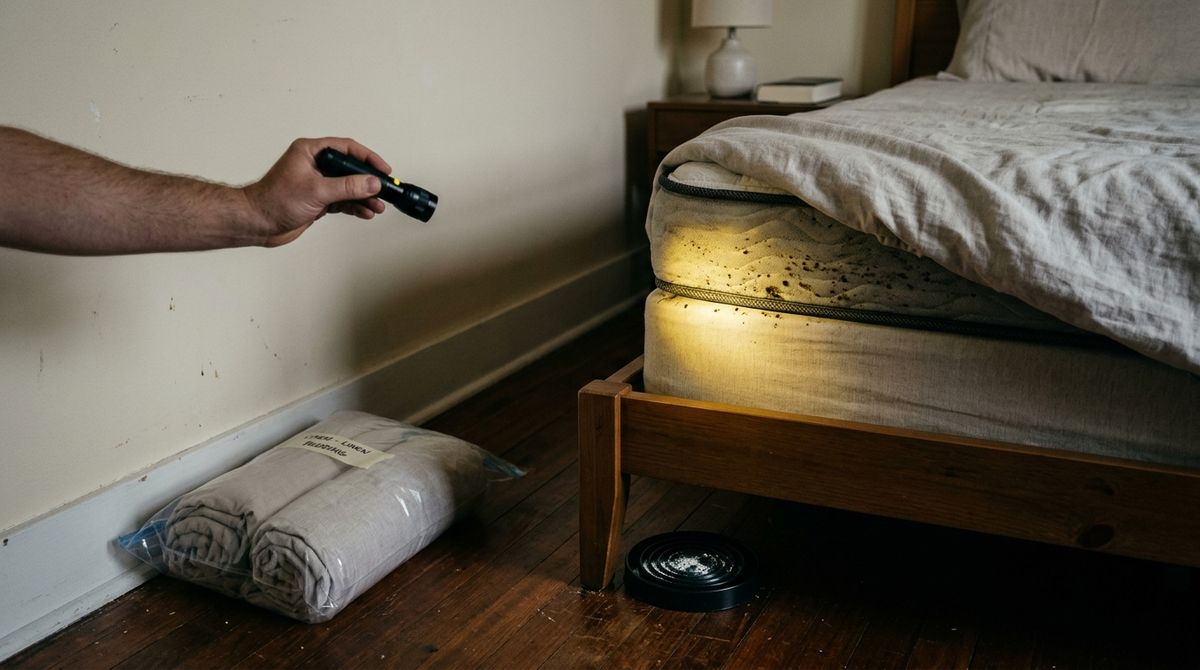
We can begin with mattress seams, the bed frame, headboard and nearby furniture. Our guide to recognising physical traces around the bed helps separate suspicious marks from stronger evidence.
Affected fabrics should be bagged before moving. We should avoid carrying loose bedding or furniture between rooms, vacuum carefully, seal collected material for disposal, reduce clutter and seal suitable cracks.
For washable fabrics, we need fabric-compatible washing and drying instructions supported by authoritative bed bug guidance. Washing alone is not dependable control; appropriate dryer heat matters. Suitable bed-bug-proof encasements and interceptor traps support monitoring, with findings recorded for follow-up.
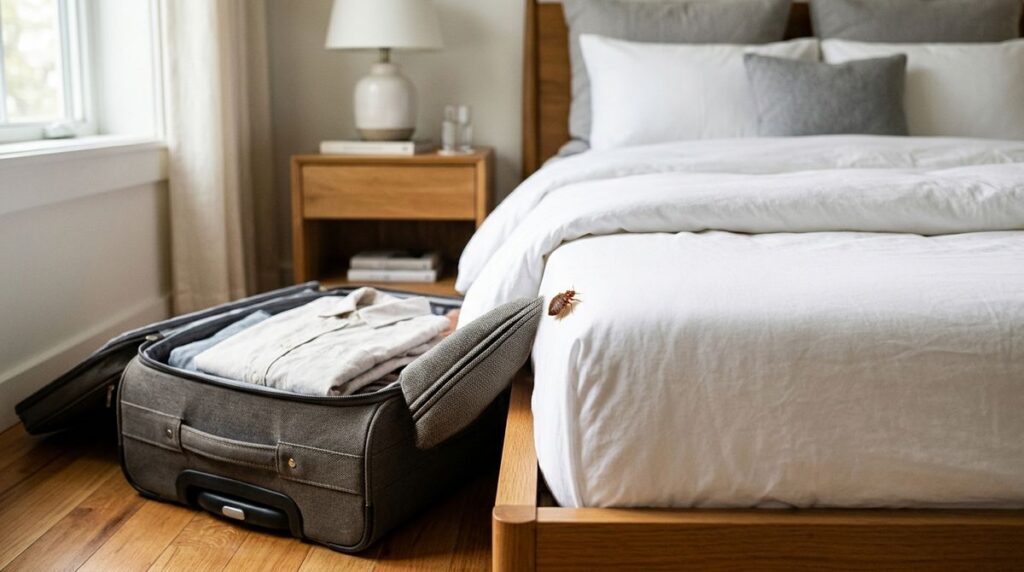
After hotel stays or balik kampung trips, luggage inspection belongs in the routine. For Airbnb hosts and homestay operators, affected sleeping spaces should come out of use while assessment is arranged, including checks of connected areas.
Use clear escalation rules rather than repeated spraying
With no confirmed activity, we should prioritise inspection and monitoring, not routine blanket spraying. With confirmed, apparently localised activity, we can combine verified control measures with an appropriately labelled spray and scheduled follow-up.
Heavy, spreading or persistent activity calls for a licensed pest-management professional. Multi-unit properties may need coordinated assessment and treatment rather than isolated room-by-room spraying.
Fresh evidence after treatment matters more than a temporary absence of sightings. A quiet night is welcome, but it is not proof of clearance.
Freezing requires validated temperatures and exposure conditions. Foggers may miss hiding places and create exposure hazards; desiccant powders need specifically labelled products and careful placement. None is an interchangeable household shortcut.
Frequently asked questions
Can we spray a mattress every night for protection?
We should not make nightly spraying a routine. The permitted surface, application amount and repeat interval come from the exact label, not from how worried we feel that evening.
Where mattress treatment is permitted, we should mist lightly, ventilate and allow a few hours of airing before sleep, or longer when the label requires. Extra applications do not establish extra protection.
Does a pleasant essential-oil scent mean the spray is working?
No. Scent strength or pleasantness cannot demonstrate repellency, egg control or activity after drying. A room can smell freshly treated while hidden insects remain untouched.
We need product-specific claims supported by relevant evidence, not fragrance as a stand-in for performance.
Can a plant-based spray stop bed bugs coming home in a suitcase?
No spray can guarantee prevention. Inspection, careful luggage handling and appropriate treatment of washable contents remain part of reducing hitchhikers after a trip.
If luggage treatment is permitted, we should mist lightly, ventilate and air the suitcase for a few hours before packing. Any longer labelled waiting period still applies.
How long does a natural spray keep working after it dries?
There is no reliable category-wide duration. Different formulations, surfaces and application conditions can produce different results.
We need the exact product’s verified label and supporting evidence for continuing protection. Lingering fragrance is not proof that a dried treatment remains effective.
What is one useful thing we can do tonight?
Certainty rarely comes from spraying more, and we do not need to solve the whole problem tonight. One manageable start is to inspect a mattress seam with a torch and photograph any suspicious physical evidence for identification.