Finding another mark on the bedsheet is exhausting, especially when we’re wondering what belongs near a sleeping child. A bottle labelled “Bed Bug and Dust Mite Repellent” can sound reassuring, but the useful question is what its evidence supports. We’ll separate supplementary protection from unsupported promises, with practical precautions for our homes, luggage and guest accommodation.
Does bed bug and dust mite repellent actually work?
Some substances repel bed bugs in laboratory tests, but that does not establish dependable protection in an occupied bedroom.
Dust mites need a different management approach. For a combined bed bug and dust mite repellent, we need evidence for each pest, not reassurance from one broad claim. Repellency can supplement ongoing prevention; it does not prove that an infestation is controlled.
Bed bugs and dust mites are different problems
The distinction changes what we need to do.
| Feature | Bed bugs | Dust mites |
|---|---|---|
| Visibility | Adults visible without magnification | Too small to see clearly unaided |
| Food | Blood | Shed skin material |
| Typical evidence | Insects, eggs, shed skins, dark spotting | Usually not identifiable by casual inspection |
| Management goal | Prevent introduction; identify and address activity | Manage moisture; remove dust and mite-derived material |
Dust mites do not bite. Reducing or repelling mites also does not automatically remove the particles already left in bedding. Those particles still need physical removal through suitable cleaning and laundering (University of Kentucky Entomology).
What the bed bug research actually showed
Krüger and colleagues’ 2021 study tested DEET, icaridin, cinnamon oil, permethrin and margosa extract. In one experiment, bed bugs chose between treated and untreated shelters. DEET, icaridin and cinnamon oil performed strongly.
In another experiment, heat and carbon dioxide encouraged bed bugs to cross a treated barrier towards a potential meal. Most substances performed less well in that setting, with DEET the exception to the general drop in performance (Krüger et al., 2021).
Preventing entry into belongings and preventing feeding are different performance questions. Neither experiment establishes lasting bedroom protection or makes those ingredients suitable for mattress application.
What must a repellent label actually promise?
Check the pest, the purpose and the permitted surface
Before choosing a bed bug repellent spray or dust mite spray, we need six details:
- Named target pest
- Intended purpose
- Permitted surface
- Application amount
- Reapplication interval
- Household precautions
“Repels” and “kills” describe different claims. A general insect claim does not establish bed bug performance, and evidence against bed bugs does not substantiate a dust mite claim.
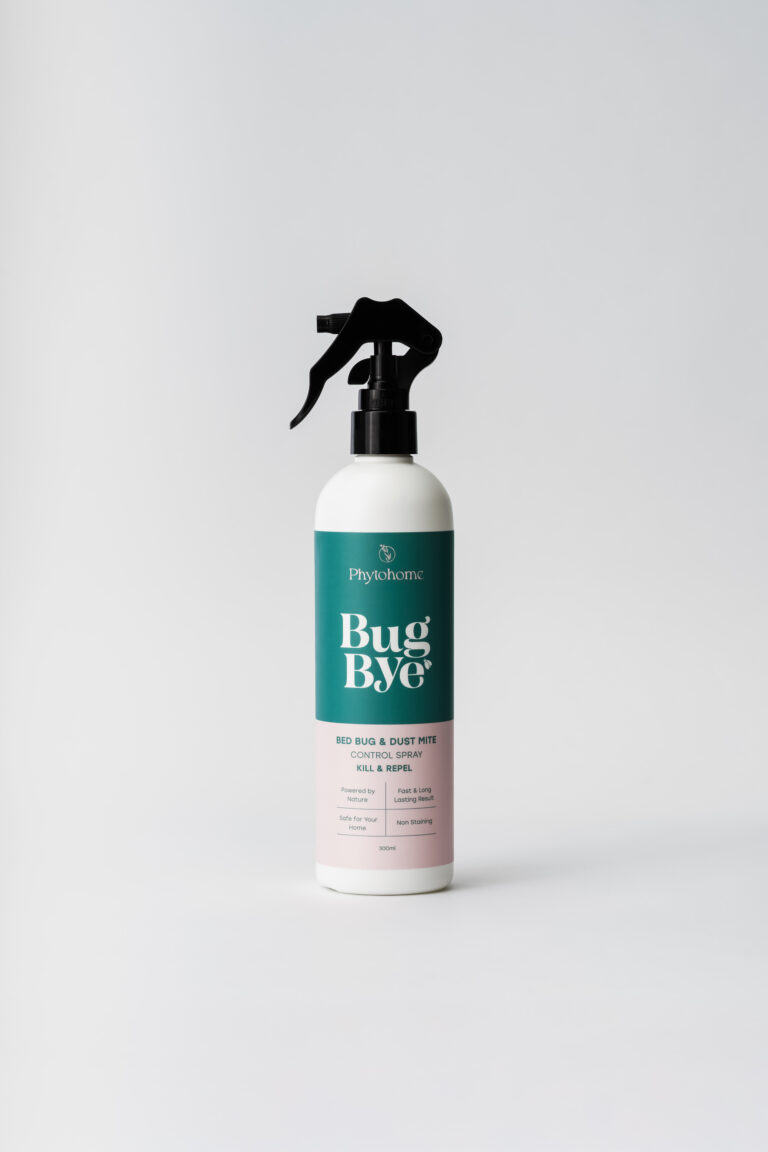
A mosquito repellent or skin-applied product is not automatically suitable for bedding. We would apply the same checks to BugBye as to any other product, without assuming ingredients, approvals or protection duration.
Check the mattress, bedding and household precautions
Memory foam, latex and sprung mattresses all need compatibility checks. Neither mattress construction nor a pest claim establishes suitability: we need both the product label and the mattress manufacturer’s care instructions.
Permission for a mattress surface does not extend automatically to removable protectors, sheets or pillows. Restrictions involving children, pets, ventilation, fragrances and handling deserve equal attention.
Our decision rule is straightforward: if the pest, surface or household precautions are unclear, we leave the spray out and use non-spray prevention.
How can we use a suitable spray without soaking the bed?
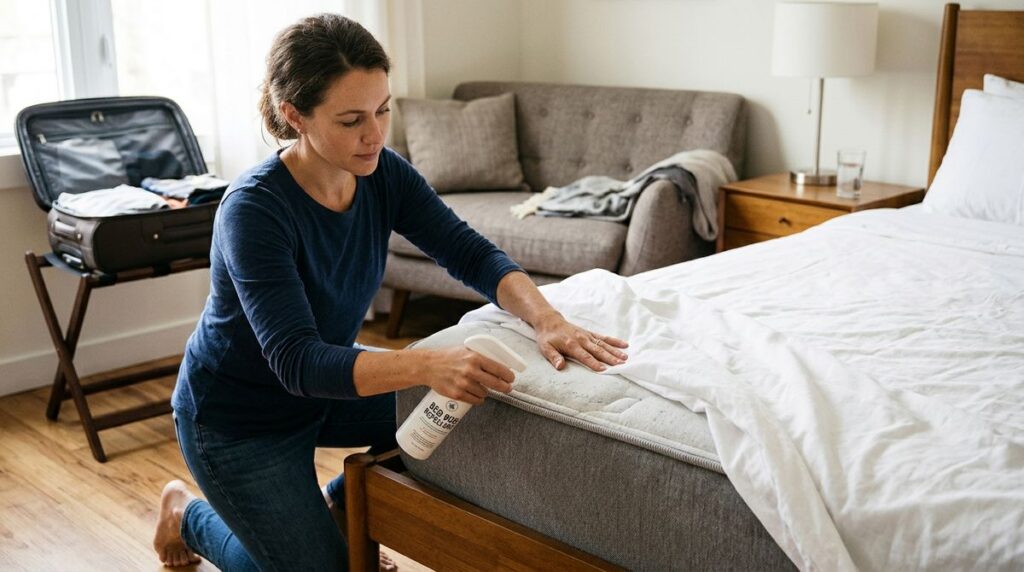
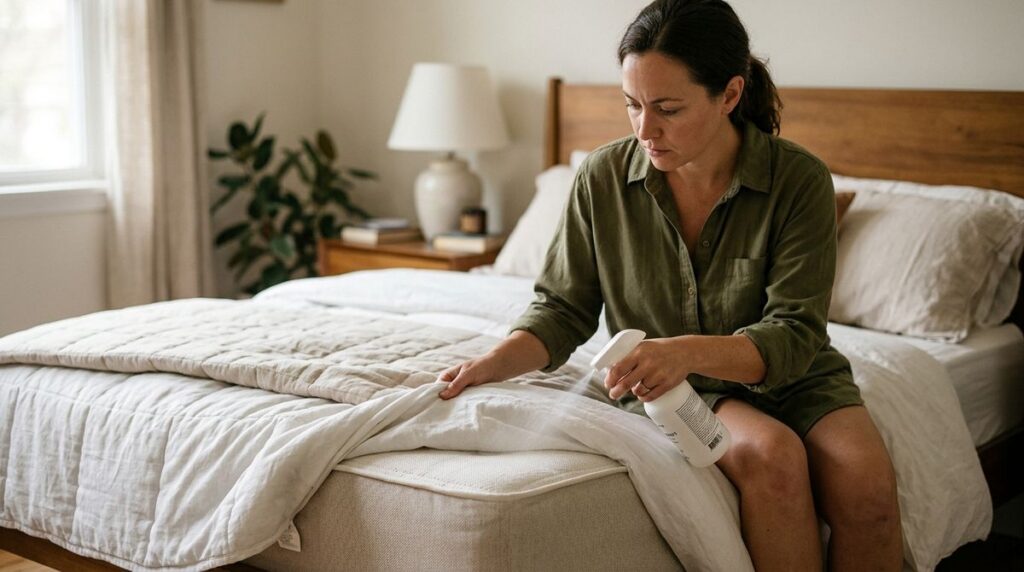
We start with explicit label permission and a discreet fabric patch test, provided the manufacturer permits application. A patch test checks for visible material changes, not household safety.
For a permitted mattress spray, we mist lightly at the labelled rate, never saturating the fabric. We ventilate and let treated items air out for a few hours before sleeping on the bed or packing a suitcase. Complete drying and any longer label restriction still apply.
Sleeping children and pets stay away during application and until all label conditions are met. Extra spray is not evidence of extra protection, and reapplication follows the labelled interval rather than an invented nightly schedule.
These precautions follow label-led pesticide-use principles, not claimed in-house testing (US EPA). Our guide to matching application to each surface explains the distinctions between beds, sofas and luggage.

Which four habits support ongoing protection in malaysia?
1. Measure humidity rather than guessing
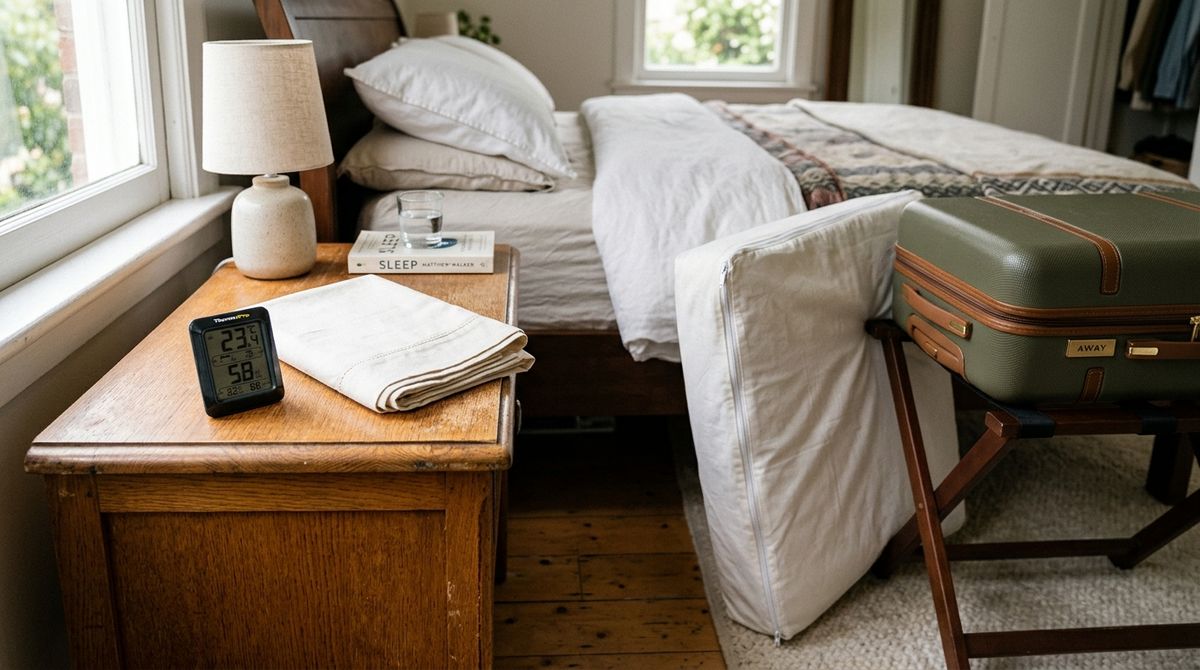
For dust mite prevention, we start with a bedroom hygrometer. Malaysian bedrooms can feel cool while remaining damp, so a short burst of air-conditioning is not proof of moisture control.
Authoritative guidance recommends keeping relative humidity below 50% where practical. A dehumidifier or appropriately managed air-conditioning can help, but we need sustained readings rather than one favourable measurement (University of Kentucky Entomology).
The aim is less favourable conditions for mites, not a promise of complete elimination.
2. Build bedding care around removal, not fragrance
Useful dust mite control centres on regular washing and thorough drying according to fabric care labels. We plan weekly bedding washing where suitable, using the hottest wash and drying settings the fabric permits.
Suitable mattress and pillow encasements, together with careful vacuuming of accessible areas, support that routine. None replaces cleaning.
A fresh scent proves neither pest control nor particle removal. We also avoid treating sunlight alone as reliable control, particularly when bedding remains damp afterwards.
3. Keep travel luggage away from sleeping surfaces
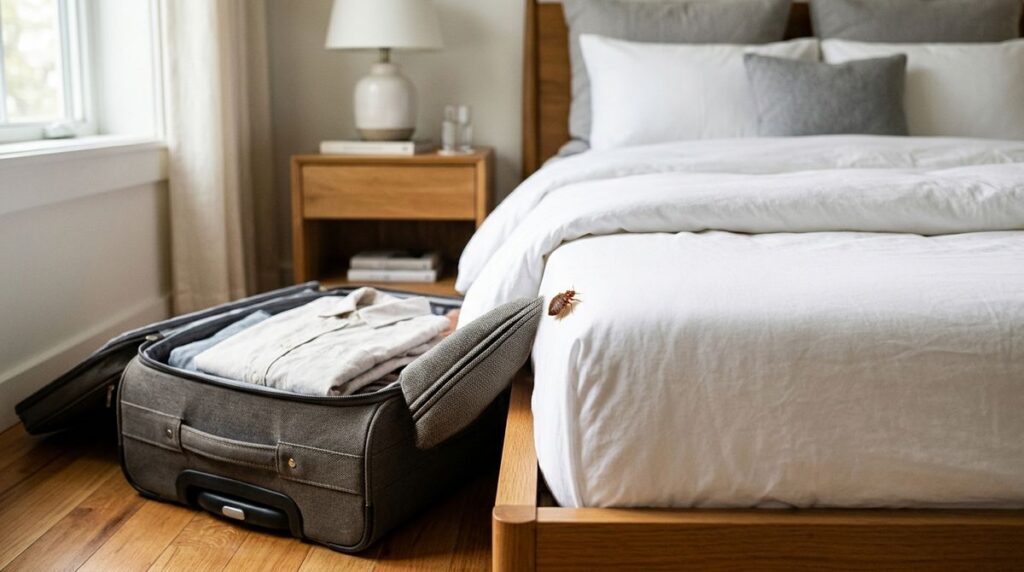
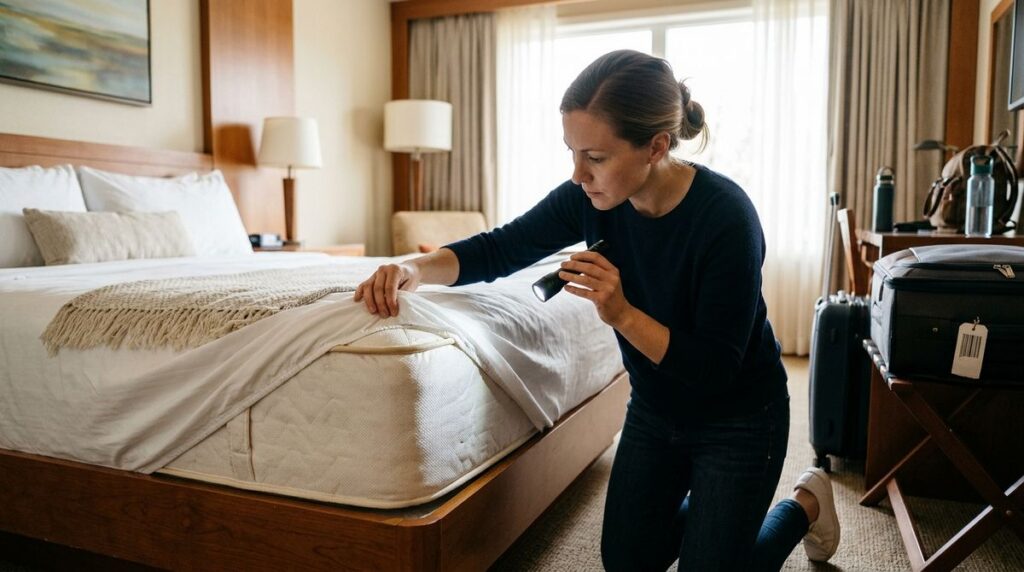
Bed bug prevention starts before unpacking after hotel stays, holidays and balik kampung trips. We inspect mattress seams and luggage racks, keep bags closed and off beds and floors, then inspect luggage before bringing it into sleeping areas (CDC Yellow Book).
Washable travel clothing stays separate for appropriate laundering and drying. Our guide to keeping hitchhikers out of suitcases adds practical packing precautions.
A bed bug repellent for luggage is optional supplementary protection, never a guaranteed barrier. If labelled for that use, we mist lightly, ventilate and air out for a few hours before packing, allowing complete drying and any longer restriction.
4. Make checks part of every accommodation turnover
For Airbnb units, homestays and rental rooms, we include mattress seams, bed frames, headboards and luggage areas in every turnover inspection. We record findings and escalate suspected activity before the next booking.
Routine spraying cannot replace inspection, monitoring or a documented response. A clean-looking room is not evidence that bed bugs are absent.
What changes when bed bugs are suspected or confirmed?
Confirm the signs before choosing a response
The signs of bed bugs include live insects, shed skins, eggs and dark spotting around seams and joints. Skin marks alone cannot confirm bed bugs.
We photograph evidence and seek reliable identification before choosing a response. Our guide to recognising physical evidence around beds helps distinguish useful clues from assumptions.
Meanwhile, we avoid carrying loose bedding or furniture between rooms, which risks spreading the problem.
Bring in a licensed professional for heavy infestations
For heavy infestations, repeated sightings or activity across multiple rooms, we bring in a licensed pest-management professional. Repellent-only bed bug treatment is not an adequate response to established activity.
Integrated pest management combines inspection, monitoring, physical removal and appropriate treatments, potentially including professionally managed heat or registered products. The combination depends on the findings, not simply the number of bites reported (US EPA).
For accommodation complaints, we prioritise assessment and appropriate room management before reopening. Spraying and immediately accepting another booking is not a substitute for resolving the concern.
Frequently asked questions
Can one spray repel both bed bugs and dust mites?
A dual-purpose spray needs evidence and suitable directions for both pests. We cannot transfer a result from blood-feeding bed bugs to dust mites simply because both occur around beds.
Even a supported mite claim does not establish removal of the mite-derived particles already in bedding.
Are essential-oil or homemade sprays a better choice for bedding?
Plant origin does not establish bedding suitability or household tolerance. We still need a suitable formulation, surface directions and household precautions.
Volatile ingredients can evaporate, and formulation affects how long an effect lasts. Cinnamon oil’s laboratory performance against bed bugs does not validate a homemade mixture, a mattress application or any dust mite claim. We would not substitute a DIY recipe for product-specific evidence.
How long does a repellent keep working?
Duration depends on formulation, the permitted surface and conditions of use. We follow substantiated label directions rather than assuming that a noticeable fragrance means continued protection.
Laboratory observation times are not overnight or multi-day household guarantees. Without a supported protection period, we cannot responsibly assign one.
What is the simplest first step before using a spray?
We start by reading the existing bottle for the named pest, permitted sleeping surface and airing instructions, before opening it.
If use is permitted, we mist lightly, ventilate and let the item air out for a few hours before sleep or packing. Complete drying and any longer label restrictions still apply.
We do not need to spray first to make progress. Choosing not to use an unsuitable product is already a useful first step.