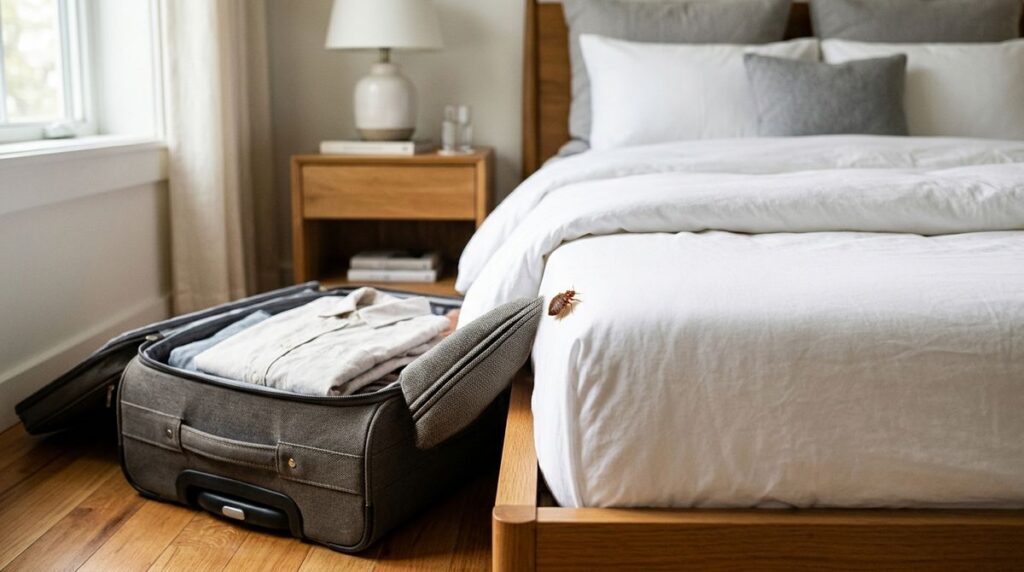
Finding a suspicious speck on freshly changed bedsheets can bring worry and embarrassment, making all that cleaning feel pointless. Bed bugs are not a verdict on our housekeeping, and understanding how do bed bugs spread starts with the belongings and building connections that bring these hitchhikers indoors. Our best protection starts with keeping unwanted arrivals out through inspection, careful luggage handling and early reporting, including after travel or possible exposure.
How do bed bugs spread if a home is clean?
Bed bugs spread mainly by hitchhiking in luggage, clothing, bedding and second-hand furniture. Bed bugs can also crawl between nearby rooms or flats. A clean home can still provide hiding places and access to sleeping people, so cleanliness alone does not prevent an infestation.
These small, blood-feeding insects hide near sleeping and resting places. Crumbs and dirty dishes are not the attraction.
University of Kentucky entomologist Michael Potter explains that pristine homes remain vulnerable because bed bugs feed on blood, not household dirt (University of Kentucky). Cleaning can expose signs and reduce hiding places, but cannot screen incoming belongings. Building density, housing conditions and access to effective treatment still influence exposure and persistence.
How bed bugs travel from house to house and between flats
Luggage and belongings carry bugs between separate homes
Hotel stays, holidays and balik kampung visits create opportunities for bugs to travel in luggage. Work bags, laundry and second-hand furniture can carry unwanted passengers too.
Live bugs hide in seams and folds; eggs can remain attached inside protected crevices. A quick shake is not a reliable inspection. Our guide to keeping hitchhikers out of suitcases covers those easily missed spaces.
Bed bugs crawl, rather than fly or jump. Belongings are the usual transport route, not continuous residence on our bodies. Transport and workplaces are possible transfer settings, but an ordinary journey or visit does not automatically cause an infestation.
Shared buildings allow movement without a suitcase
In flats and hotels, bugs can crawl through connecting gaps around walls, service routes and adjoining rooms. High turnover also creates opportunities for infested belongings to move.
How and Lee’s survey covered 54 already-infested Malaysian and Singaporean sites, mostly hotels and public accommodation. It offers accommodation-specific evidence, not a national prevalence estimate (How and Lee).
Confirmed evidence warrants prompt contact with management or the operator so adjoining spaces can be assessed. For hosts and landlords, discreet documentation and coordinated inspection beat blame or quietly relocating belongings.
How quickly can bed bugs spread?
We need to separate three events: a bug crawling to another hiding place, a bug travelling inside an item, and a breeding population becoming detectable.
Hitchhiking can happen during one journey. Discovery may take weeks, especially when insects remain hidden or bites go unnoticed. There is no dependable “safe after this many days” rule.
The number and life stages introduced, temperature, access to sleeping people, hiding places and inspection quality all affect the outcome. Reproduction can build a population after introduction, but not every introduced bug establishes an infestation. A clean-looking room immediately after travel is reassuring, not proof that nothing arrived.
What counts as evidence of bed bugs?
Check seams, headboards and nearby cracks
Adults are approximately 5 to 7 mm long, reddish-brown and flat before feeding. Younger stages and eggs are harder to spot.
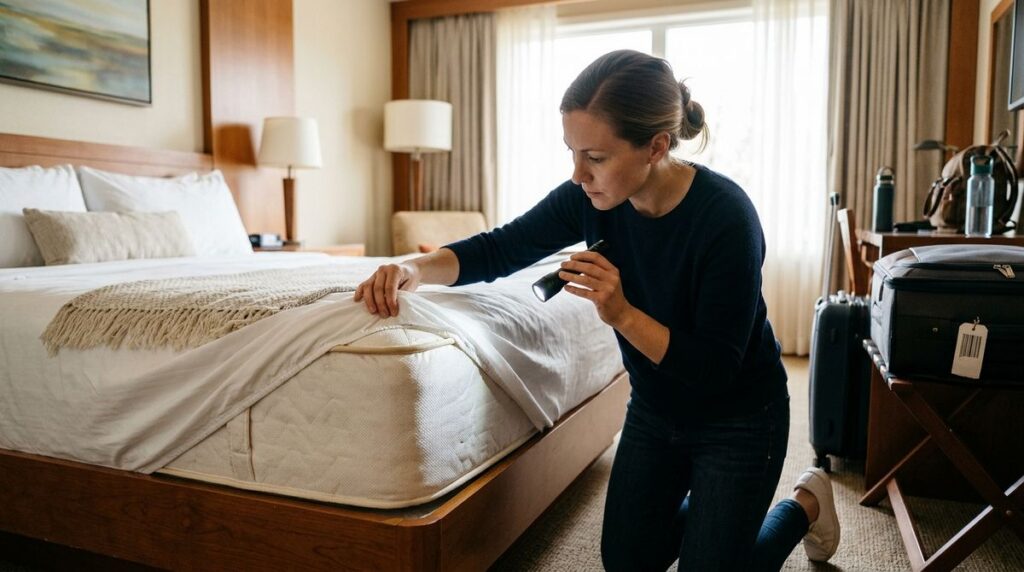
We can focus inspection on mattress piping, labels, bed-frame joints, headboards and nearby cracks. Bedding, headboards and cracks were prominent hiding places in How and Lee’s local survey.
Look for live insects, shed skins, attached eggs and dark spotting. No single stain settles the question; recognising several clues together provides a stronger basis for identification.
Dust mites are different organisms and do not bite. A bite pattern cannot identify bed bugs or establish a dust-mite problem.
Save a specimen rather than guessing from marks
Unexplained bites alone neither confirm bed bugs nor prove where exposure happened. Conversely, no visible bites does not rule out an infestation.
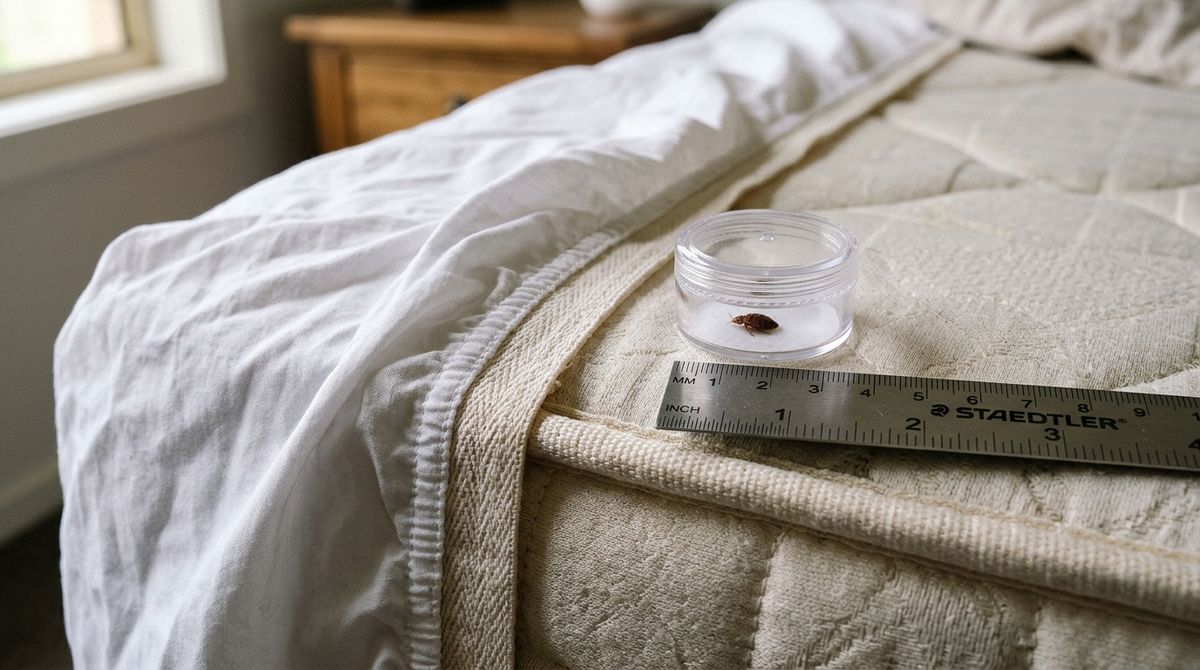
We can photograph a suspected insect beside a ruler, retain it in a sealed container where possible, and record the date and exact location. That gives a professional something more dependable than skin marks to assess.
How we can stop the spread after travel or possible exposure
Contain belongings before moving through the home
After suspected exposure, we can keep bags away from beds and sofas, contain suitable items in sealed bags, and unpack in a designated area. Clothing can move directly to the laundry area in closed bags, rather than loose through bedrooms.
For suitable fabrics, use a hot wash followed by an appropriate high-heat dryer cycle, following fabric and appliance instructions. NPMA/Orkin guidance recommends 30 to 45 minutes on high heat for dryer-safe clothing; load size and appliance performance matter. Washing alone and ordinary sun exposure are not reliable treatments.
Inspect suitcase seams, pockets and wheels. Sealing contains risk but is not a rapid treatment. Moving to another bed is not a workaround and can encourage spread.
Build protection around inspection, not spraying alone
Before unpacking at accommodation, inspect the bed area and keep luggage off beds and upholstered furniture. Our guide to checking the room before settling in makes that inspection easier to follow.
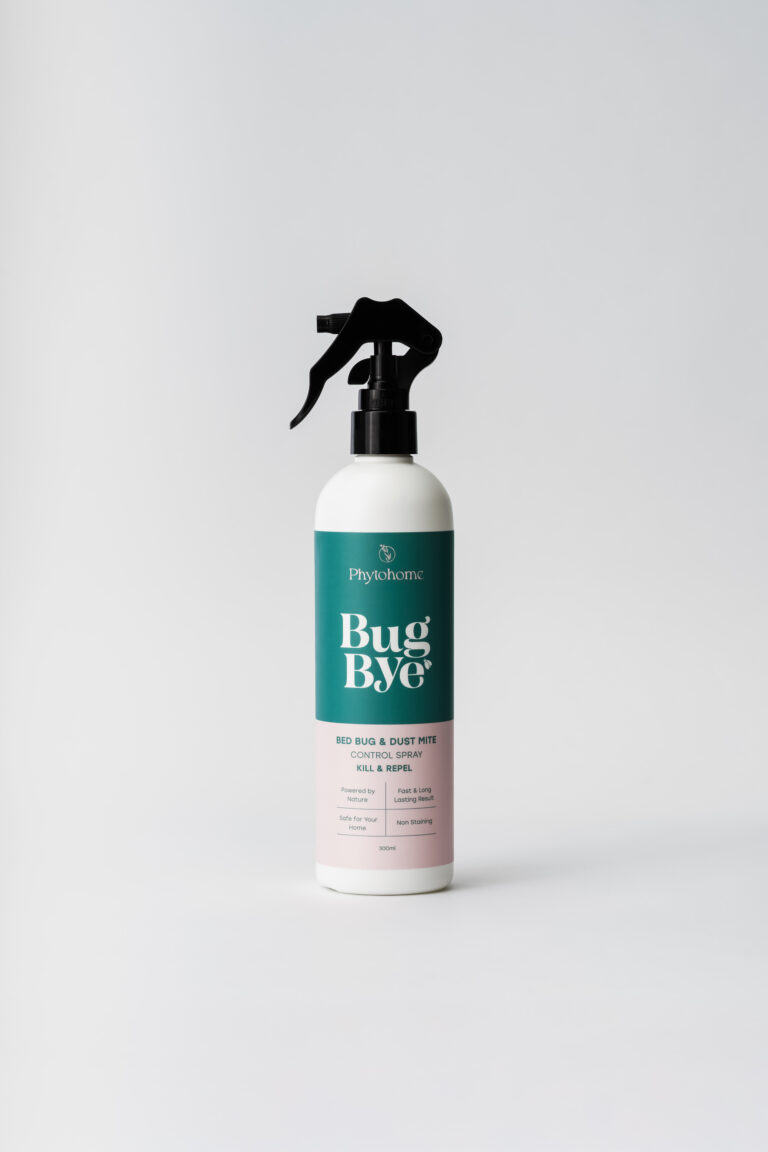
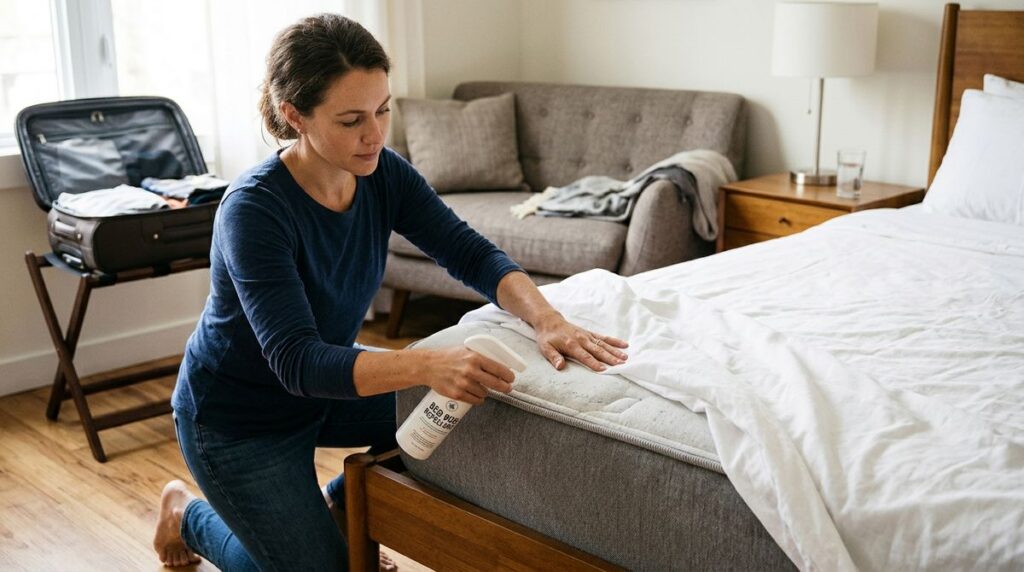
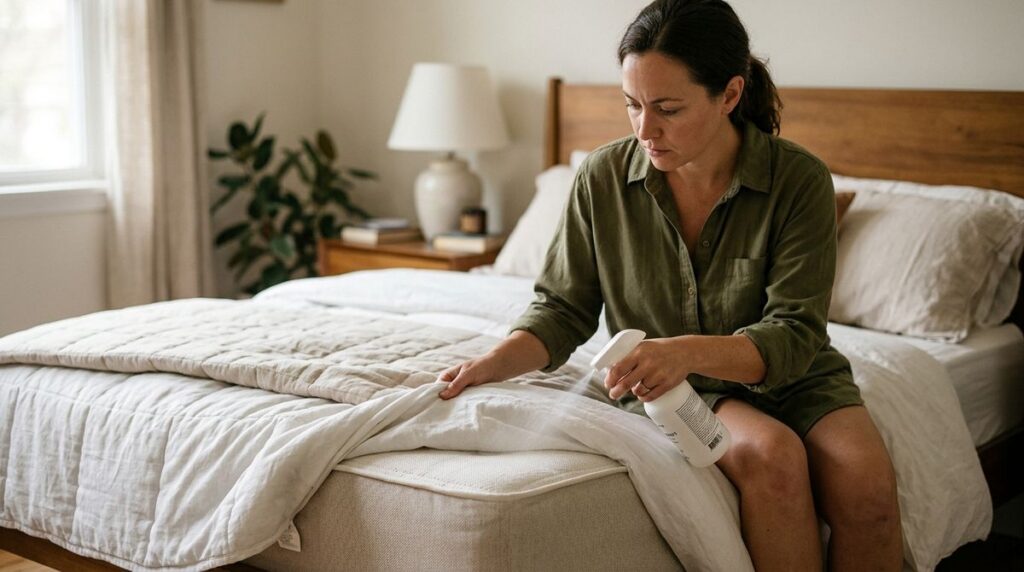
Any repellent is supplementary, not proof against introduction or an established infestation. Use only products labelled for the intended pest, surface and use. For a suitable spray, mist lightly, ventilate, and let treated items air out for a few hours before sleeping on a bed or packing a suitcase. Follow any longer label requirement.
Avoid foggers, improvised household-cleaner treatments and moving unwrapped suspect furniture through shared spaces. Research has documented these harmful DIY responses (Ohio State University). Heavy infestations, repeated confirmed sightings or spread across rooms call for a licensed pest-management professional, with coordinated action in shared buildings.
Frequently asked questions
Can bed bugs spread through a hug or shared clothing?
Bed bugs do not normally live on our bodies like lice. Transfer is more commonly linked to clothing, bags or other belongings carrying hidden bugs. A hug alone does not establish spread; shared clothing from an affected space deserves closer inspection and appropriate handling.
What can we do with a visitor’s bag after possible exposure?
We can agree on a discreet place away from beds and upholstered furniture, using a sealed container or bag where practical. Handling can follow the evidence without stigmatising a guest. Possible exposure does not automatically mean an infested home, and indiscriminate spraying is not the answer.
Can second-hand furniture bring bed bugs into a clean home?
Yes. Seams, joints, screw holes and upholstery can conceal bugs or eggs. Our rule is to decline an item with suspicious evidence or inaccessible hiding places that cannot be assessed confidently. A clean appearance and a seller’s reassurance cannot replace examining furniture before bringing it indoors.
Does one bed bug mean the whole home is infested?
One confirmed bug warrants prompt action, but does not prove every room is affected. Inspection establishes the extent; heavy infestations need licensed help. We do not need to solve the whole problem at once. One manageable start is to photograph the specimen beside a ruler and keep it sealed for identification.