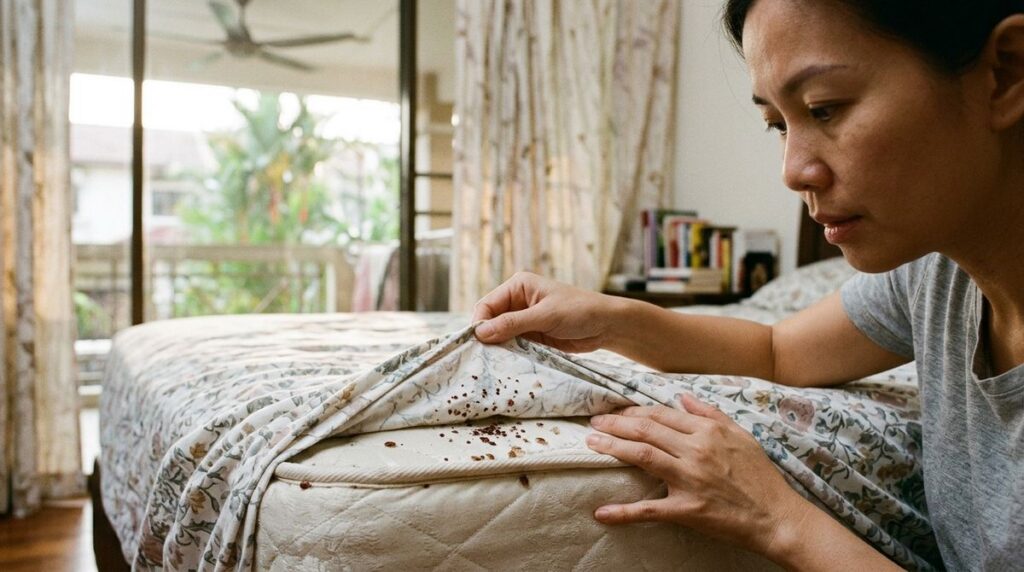
Finding unexplained marks on bedding feels unsettling, especially when the next thought is about children’s mattresses or a suitcase just brought home. For households searching “bed bugs Malaysia”, we start with keeping unwanted hitchhikers away and maintaining ongoing protection, without rushing to spray sleeping surfaces. Prevention and an established infestation need different responses: here, we explain which signs matter, how to contain a suspected find, and when professional treatment becomes the sensible choice.
Which signs suggest bed bugs at home?
Live bed bugs, pale eggs or shed skins, dark spotting around mattress seams, and unexplained blood marks warrant inspection. Bites alone do not confirm bed bugs.
We treat these clues as a reason to investigate, not proof of poor housekeeping. Bed bugs can arrive in clean homes through luggage or furniture. Recognising physical evidence early matters more than immediately reaching for a spray.
Live insects, eggs and shed skins
Adult bed bugs are small, wingless insects with flattened, oval bodies, usually reddish-brown and roughly apple-seed sized. Young bed bugs are smaller and paler; eggs are tiny and whitish. Translucent shed skins can collect in hiding places.
Bed bugs feed on blood and usually remain concealed between feeds. Hidden eggs and immature insects make a quick surface inspection, or a single treatment, an incomplete response.
Tropical bed bugs, Cimex hemipterus, are relevant locally. A survey of 54 infested premises in Malaysia and Singapore found this species at every surveyed site, although species identification needs more than a casual photograph (Journal of Vector Ecology). That selected sample does not establish how common infestations are across Malaysian homes.
Dark spots and blood marks deserve a closer look
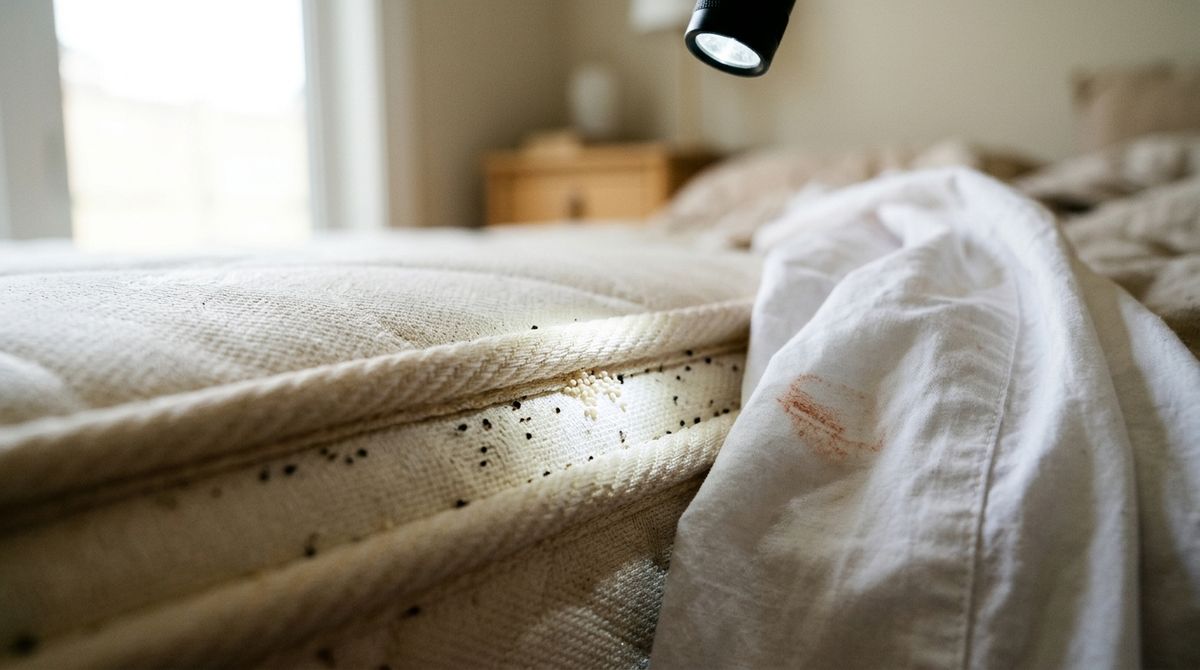
Dark faecal spotting often gathers around mattress seams, furniture joints and other hiding places. Small blood marks on sheets can accompany activity, but scratched skin and other sources can also stain bedding.
Old stains may remain after successful treatment. We therefore record location and date rather than assuming every mark is fresh. Smell alone is not a dependable identification shortcut.
Bed bug bites cannot confirm the source
The appearance, timing or clustering of skin marks cannot reliably identify the insect responsible. A line of three marks is not proof.
We separate two tasks: identifying an insect through physical evidence and getting appropriate advice about skin symptoms. Malaysian pest-control research also describes control as a challenge requiring more than assumptions based on bites (Journal of Entomology and Zoology Studies).
How can we inspect the bed and rule out similar pests?
A focused inspection gives us better information than stripping every room at once. We keep belongings where found, use a torch, and work slowly through likely hiding places.
Start with seams, bed frames and nearby hiding places
Begin with mattress piping, labels and folds, followed by divan seams. Next come bed-frame joints, screw holes and both sides of the headboard, where safely accessible. A mattress can look clear while insects remain behind the bed.
The Malaysia-Singapore survey identified bedding, headboards and nearby cracks among the main harbourages. Our inspection therefore extends to bedside furniture, skirting-board gaps, sofa seams and luggage stored near sleeping areas.
Keep sheets and belongings in the room during this check rather than carrying loose items through the home. Avoid dismantling sockets or opening electrical equipment. Suspected activity around fittings belongs in a professional inspection.
For a closer visual reference, our guide to recognising small physical clues explains what deserves attention beyond an unexplained mark on a sheet.
Compare body shape, legs and movement
A tiny brown insect is not automatically a bed bug. Body shape and movement help narrow the possibilities, although a preserved specimen remains more useful than a blurry photograph.
| Possible pest | Visible features | Movement or distinguishing clue |
|---|---|---|
| Bed bug | Six legs; broad, flattened oval body | Crawls rather than jumps |
| Flea | Six legs; narrow side-on profile | Conspicuous jumping |
| Adult or nymphal tick | Eight legs; different body outline | Crawls; larvae have six legs |
| Carpet beetle larva | Elongated, hairy or bristly body | Visible bristles |
| Booklouse | Very small, pale body; prominent head | Usually much smaller |
Household dust mites cannot ordinarily be identified with the naked eye. A clearly visible insect crawling along a seam is not a visible dust mite.
Leg counts can be difficult on tiny or damaged specimens. We use the table to guide observation, not force an identification. When features remain unclear, specimen-based assessment prevents unnecessary treatment for the wrong pest.
What needs to happen immediately after a suspected find?
The first response is containment, not a room-wide clear-out. A useful specimen and an accurate location record can prevent considerable guesswork.
Keep a specimen and record the exact location
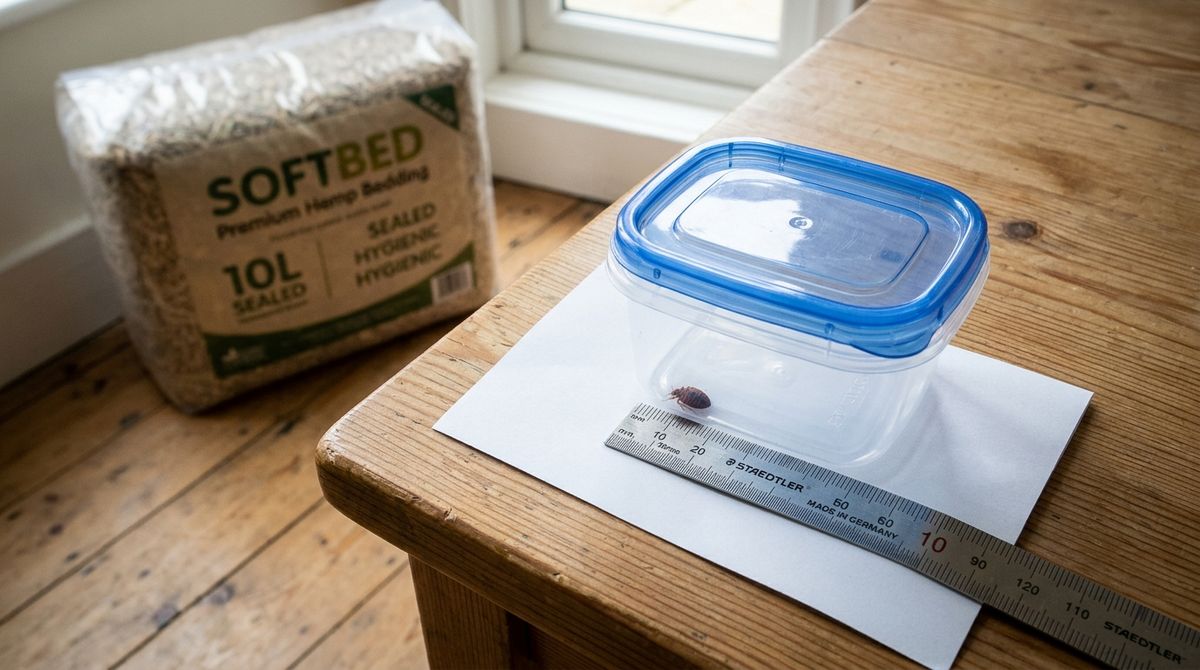
Place the insect in a securely closed, clear container. Clear tape is an alternative when a container is unavailable, although a container better preserves body features.
Take well-lit photographs beside a ruler or another size reference. Record the date, room, furniture item and precise position, such as “behind the headboard, lower right joint”. Avoid crushing the only specimen before photographing it.
We recommend identification by a licensed pest professional rather than relying solely on image-search matches.
Contain belongings without relocating the problem
Bag affected laundry where collected and keep it separate from processed belongings. Avoid moving pillows, bedding, luggage or furniture into another bedroom.
Sleeping on the sofa can create another resting place needing inspection. Instead of automatically changing rooms, obtain prompt advice on managing the affected sleeping area.
A mattress does not need automatic disposal. Leaving suspected furniture unwrapped in a lift lobby or communal collection area risks spreading insects. Repeated live finds, or findings across several rooms, call for prompt professional assessment.
How do bed bugs reach malaysian homes and neighbouring units?
Bed bugs travel mainly as unwanted passengers. Cleanliness does not prevent an insect from arriving inside a bag or concealed furniture joint.
Luggage and furniture can carry unwanted hitchhikers
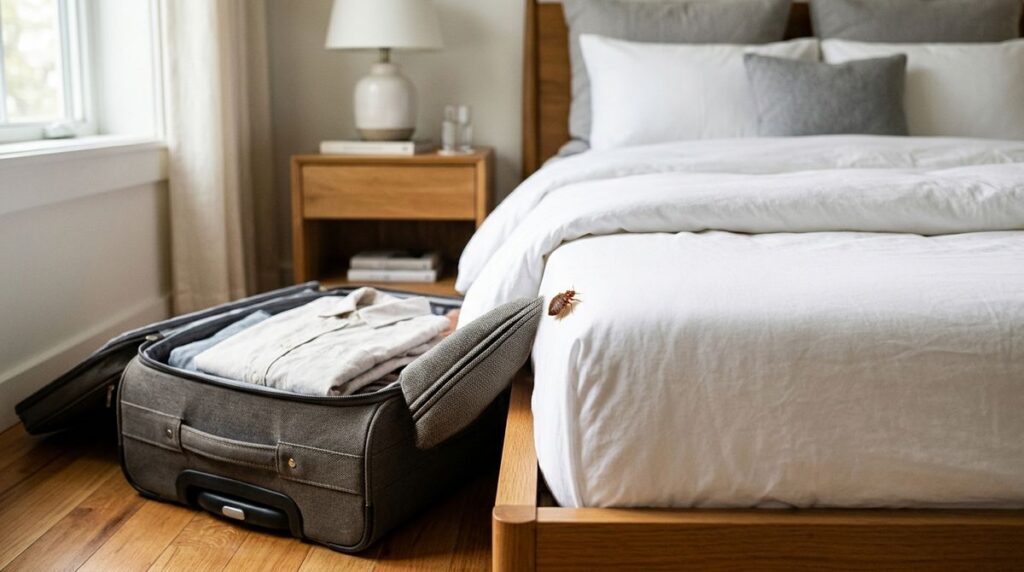
Luggage, clothing, upholstered furniture and other belongings can transport bed bugs between locations. Hotels, homestays and balik kampung stays are possible opportunities for hitchhiking, not evidence that any particular setting is infested.
Before unpacking, we recommend checking the sleeping area and keeping luggage away from beds and upholstered seating. On returning home, inspect bag seams, zips and pockets before bringing luggage into bedrooms.
Our advice on keeping travel bags separate from sleeping spaces develops this routine. Second-hand furniture also deserves a seam-and-joint inspection before entering the home, including pieces that look clean.
Shared buildings need a coordinated response
In flats, condominiums and hostels, spread can happen through connected gaps or service routes, as well as belongings carried between units. Finding bed bugs does not establish which neighbouring space, if any, was the source.
We recommend reporting dated photographs, specimen findings, affected locations and previous treatment to building management. A licensed professional can determine whether relevant adjoining units need coordinated inspection.
For Airbnb hosts, homestay operators and landlords, pausing use of the affected room protects the response from further movement of guests and belongings. Document findings, arrange assessment and follow the relevant booking platform’s procedures. Moving furnishings into another guest room is not containment.
The aim is coordination without blame. A suspected building-level problem rarely improves through isolated spraying alone.
How can we handle laundry, shoes and items that cannot take heat?
Handling belongings is often the exhausting part. We make the task more manageable by separating untreated items from processed items, then choosing a method suited to each material.
Separate untreated items from processed belongings
Check care labels before laundering. Use a fabric-compatible hot laundering or tumble-drying protocol recommended by the treating professional, with the drying stage treated as a deliberate control step rather than ordinary airing. An overloaded dryer or unsuitable setting may not heat the whole load adequately.
For loads that cannot tolerate the required conditions, keep items contained pending another treatment choice. Ordinary cool washing is not a guaranteed solution.
After processing, transfer belongings directly into clean, sealed bags or containers. Keep these away from untreated laundry and the original collection bags.
Bagging limits movement; it is not a quick treatment by itself. Brief sunshine and a hot parked car are also unreliable substitutes for a controlled process. We avoid guessing how long sealed belongings must remain stored because survival depends on conditions.
Give delicate and electrical items a separate plan
For shoes, inspect stitching, soles and linings, then respect material-care limits. Heat can damage adhesives, leather and decorative finishes.
Books need checks around bindings and covers, followed by isolation pending professional advice. With electronics, inspect external seams only. Never spray ports, open equipment for pest treatment or attempt improvised heating.
Delicate fabrics may need a cleaner’s involvement. Disclose suspected bed bugs before transport so containment and acceptance can be agreed.
Valuable or unsuitable belongings need professionally selected treatment. Household freezing, improvised steam and direct sun are not interchangeable with validated protocols: exposure throughout the item matters, not merely a cold freezer setting or a hot outer surface.
What does ongoing protection involve, and when is professional treatment needed?
Ongoing protection centres on spotting introductions early and limiting opportunities for spread. Repellents may have a supporting role where appropriately labelled, but no product guarantees exclusion.
Build protection around inspection and containment
Regular seam checks, less clutter near beds and careful handling of incoming luggage make evidence easier to notice. Suitable mattress encasements can simplify inspection, while compatible monitoring devices can help detect activity.
Encasements and bed-leg interceptors support management. Neither replaces inspection of the frame, headboard and surrounding room, and some bed designs cannot accommodate interceptors properly.
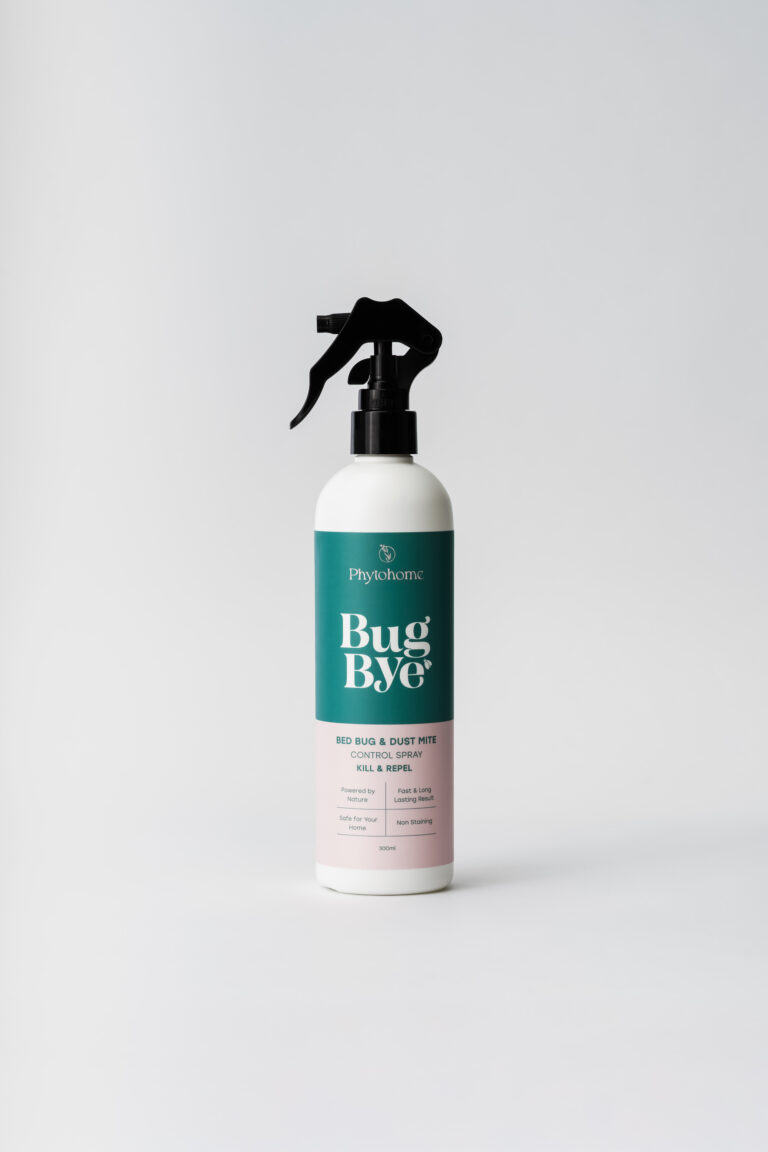
We distinguish repellent protection from infestation control because the two are easily confused. A suitably labelled repellent may be an adjunct to prevention, but spraying an active infestation with repellent instead of arranging assessment can disturb insects and complicate control.
Keep any spray use light, ventilated and label-led
Use only appropriately registered products labelled for the intended indoor site, material and purpose. Unlabelled mixtures, outdoor insecticides used indoors and mattress applications not permitted by the label have no place in this routine.
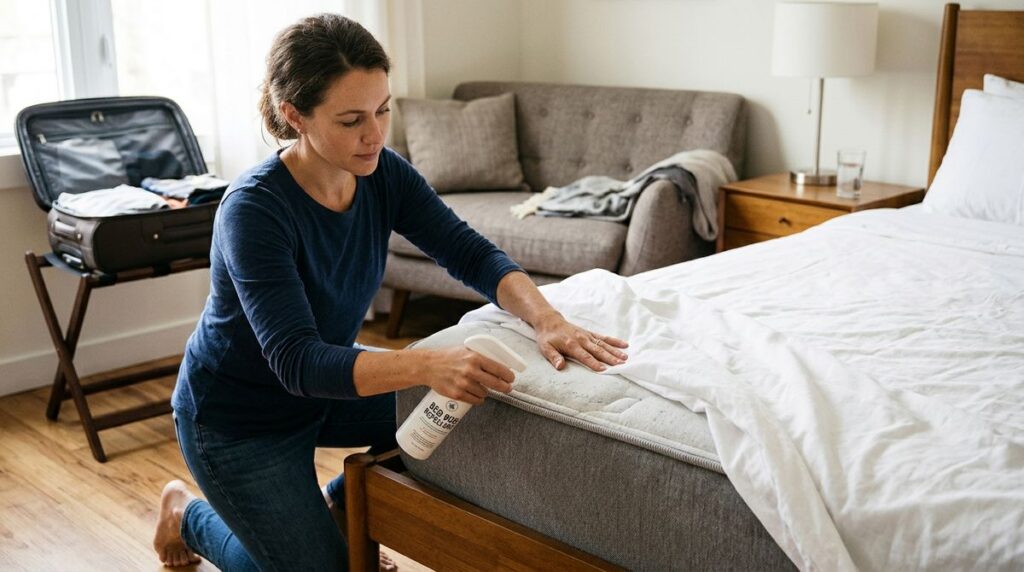
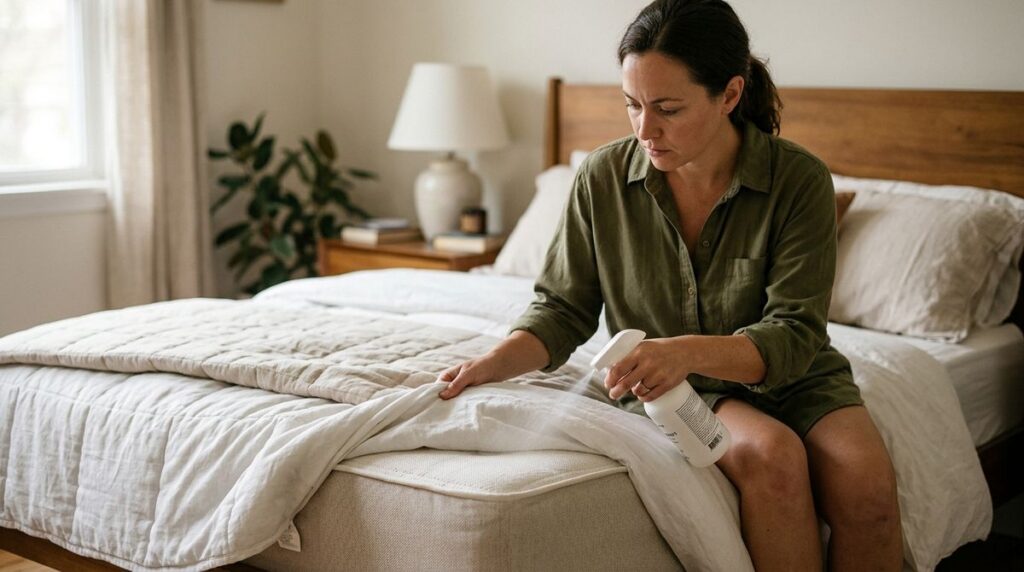
Where the label permits mist application, mist lightly, ventilate, and let treated items air out for a few hours before sleeping on a bed or packing a suitcase. Any longer label drying or re-entry requirement takes priority.
Keep children and pets away during application and until all label conditions are met. Never spray skin or electrical equipment. Bedding surfaces must not be sprayed unless that particular use is explicitly permitted.
Our explanation of label-led application on household items reinforces the same principle: more spray is not better protection. Plant-based ingredients also do not remove the need for application precautions.
Heavy or persistent activity needs a licensed professional
Heavy infestations, multiple affected rooms, recurring live insects and suspected spread between units need a licensed pest professional. We look for one programme covering inspection, preparation, targeted treatment, monitoring and follow-up, rather than an isolated spray visit.
Controlled professional heat differs from household heating. Equipment, temperature measurement and treatment planning address concealed areas while managing risks to belongings and the building.
Insecticide resistance is a documented control challenge in Malaysian tropical bed bugs, but this does not mean every infestation resists every insecticide (Malaysian resistance study). Method selection belongs with an informed professional, not repeated experiments with retail sprays.
A written scope should explain treated areas, preparation, follow-up and the evidence used to judge progress.
How can we tell whether bed bugs are still active after treatment?
After treatment, every mark can feel suspicious. A dated baseline helps us distinguish something newly found from something genuinely new.
Establish a dated baseline before checking again
Photograph and date existing stains, and log where specimens were collected. Record monitoring-device locations too, so later checks cover the same points.
Follow the professional’s instructions on cleaning, laundering, furniture movement and monitoring. Unplanned spraying or moving furniture can interfere with the agreed programme.
Check the same mattress seams, bed-frame joints and monitoring points on the agreed schedule. A simple record of date, location and finding makes changes easier to recognise than repeated, unsystematic searches.
Skin marks alone cannot establish treatment failure or reveal exactly when exposure happened. Physical evidence remains the stronger basis for a pest-control decision.
Use new physical evidence to guide the next decision
Prioritise live insects, newly trapped specimens and spotting documented after the baseline. An old stain noticed for the first time is different from a stain appearing on a previously photographed, clear area.
One quiet night does not establish that an infestation has ended. Equally, one unexplained skin mark does not establish that treatment failed.
Have the provider define follow-up visits and clearance criteria within the treatment programme. There is no single waiting period that proves every property clear, regardless of method or starting conditions.
Continuing live activity or findings in new rooms warrant reassessment. Share photographs and the log before making further changes. We gain more useful information from a calm, dated record than from repeatedly inspecting every possession.
Frequently asked questions
Can a healthcare professional confirm bed bugs from bite marks?
Skin marks alone generally cannot identify the responsible insect. A healthcare professional can assess symptoms, while a collected insect needs separate identification.
Photographs and an exposure timeline can provide context at an appointment, but neither guarantees confirmation of bed bugs. We keep symptom assessment and pest identification connected without treating either as a substitute for the other.
Where can we get advice about itchy or worsening skin marks?
Questions about itch relief belong with a pharmacist or healthcare professional. Prompt assessment is appropriate for severe, persistent or worsening symptoms.
Breathing difficulty needs urgent medical assistance. We avoid recommending household mixtures for skin or treating internet photographs as a diagnosis. Bringing a symptom timeline and relevant photographs can make the consultation more useful.
How much does bed bug treatment cost in malaysia?
One provider’s indicative Klang Valley programme ranges are RM400 to RM800 for one room, RM600 to RM1,500 for a condominium unit, and RM1,200 to RM3,000 for a landed terrace house (published treatment ranges).
These are not national fixed prices. Affected rooms, access to hiding places, methods and follow-up influence the total. We compare written programme costs, preparation requirements and return terms rather than a single-visit price.
Why can treatment require more than one visit?
Concealed insects, eggs and difficult-to-reach harbourages can affect what the initial treatment reaches. The chosen method and any later reintroduction also influence follow-up needs.
Further visits provide opportunities to inspect, assess new evidence and treat remaining activity where needed. No fixed number of visits guarantees resolution in every home. The programme should explain the purpose of follow-up and how continuing findings will be handled.
Do home remedies or repellents replace professional treatment?
No. Repellents do not replace inspection and a complete response to established activity. Improvised mixtures, indiscriminate spraying and unverified remedies can waste time, damage belongings or complicate assessment.
We reserve appropriately labelled repellents for a supporting protection role. Heavy infestations, repeated live findings or several affected rooms need a licensed professional, with monitoring and follow-up included in the plan.
Is throwing away the mattress the first step?
No. Bed frames, headboards, nearby furniture and other hiding places can remain affected after mattress disposal. Replacement alone can leave the problem in place.
We recommend identification and assessment before buying another mattress. If disposal is necessary, follow professional containment advice rather than carrying suspected furniture unwrapped through shared areas.
There is no need to solve everything at once. Our small starting action is to photograph and date any suspicious evidence along one mattress seam.